

Biographies
Otto Frank
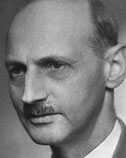
About Otto
Otto Frank was born on 12 May 1889 in Frankfurt, Germany. His father Michael was a banker and he had two brothers and a sister.
Before the Secret Annex
Otto studied economics, but gave it up to work in a bank. He was then given the opportunity, via a school friend, to do an internship at Macy's Department Store in New York City. In 1914, Otto and his brothers were conscripted to the German Army to fight in World War 1.
Otto married Edith Hollander in 1925. In 1933, when Hitler came to power, the family decided Germany was too dangerous and moved to Holland, where Otto set up his own company called Opekta.
During the Secret Annex
When Germany invaded Holland on 10 May 1940, various restrictions were put on Jews. Otto was not allowed to run his own business so he made his Dutch colleagues Victor Kugler and Johannes Kleiman the official owners of his business, but continued to secretly run it himself.
When his daughter Margot received call-up papers to report to a labour camp, Otto hid his family in a specially prepared annex above his office.
After the Secret Annex
After the annex was raided, the occupants were transferred to Auschwitz-Birkenau concentration camp. Along with his family, Otto avoided the selection for the gas chamber. He managed to survive until the camp was liberated in January 1945.
Five months later, Otto heard of his daughters' deaths in Bergen-Belsen camp, where they had been transferred. Miep Gies returned Anne's Diary to him, after finding it in the empty annex. During the 1950's, Otto remarried and moved to Switzerland, where he lived until his death in 1980.
Iain Glen
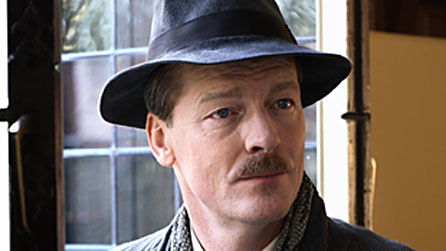
Iain's Career Highlights
Bafta nominated, Iain Glen trained at the Royal Academy of Dramatic Arts in London. His theatre work includes the Royal Shakespeare Company and The Blue Room with Nicole Kidman.
His film and television work varies from Trial and Retribution to the Resident Evil films, and he also appeared in Gorillas in the Mist. Iain has also starred in The Belsen Redemption which centred on the liberation of Bergen-Belsen camp where Anne, Margot and Edith Frank eventually lost their lives.
Iain on Otto
"Otto was idolised and adored by Anne and the challenge was to create a three dimensional person who went through many emotions and suffered fears and doubts that he rarely showed and wasn't perceived by his youngest daughter."
I do think Otto was incredibly courageous, devising a deception to keep his family together against vile oppression. Otto throughout the trials of their incarceration remained hopeful and did everything to create a normality of upbringing for his adored daughters."


BBC iD
BBC iDBBC navigation
BBC links

BBC © 2014The BBC is not responsible for the content of external sites. Read more.
This page is best viewed in an up-to-date web browser with style sheets (CSS) enabled. While you will be able to view the content of this page in your current browser, you will not be able to get the full visual experience. Please consider upgrading your browser software or enabling style sheets (CSS) if you are able to do so.
