|
 |
 | | | | | | |||||||||||||||||||||||||||||||||||||||||||||||||||||||||||||||||||||||||||||||||||||||||||||||||||||||||||||||||||||||||||||||||||||||||||||||||||||||||||||||||||||||||||||||||||||||||||||||||||||||||||||
| | | You are in: World: Middle East | |||||||||||||||||||||||||||||||||||||||||||||||||||||||||||||||||||||||||||||||||||||||||||||||||||||||||||||||||||||||||||||||||||||||||||||||||||||||||||||||||||||||||||||||||||||||||||||||||||||||||||||||
|
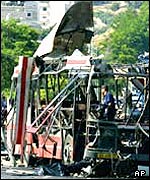
| | Thursday, 18 July, 2002, 11:02 GMT 12:02 UK The battle to save lives The carnage of the bus bomb on 18 June was one of the worst Yonatan Yagodovsky had seen in his 25 years with Magen David Adom - the Israeli equivalent of the Red Cross. He was on his way to work in Jerusalem when he received the emergency call. "I rushed to the scene immediately. On the way, I was liaising with the ambulances and mobile intensive care units - we knew there would be a lot of casualties, so we dispatched as many people as we could," he says.
"This is a very sad feeling - that there are people that we just couldn't help." The bomber's explosive belt was packed with tiny metal marbles that tore through flesh. And the charge itself was so powerful that it tore the roof off the bus and left the charred shell of the vehicle on its side. Arms and legs were strewn around the bus, and a pool of blood was on the road. "This was a very dramatic situation," he says. "With the bomb going off in an enclosed space many of the casualties suffered terrible injuries." These included horrific wounds to the head and chest and many of the injured suffered from damaged internal organs as well as puncture wounds. "This bombing was particularly awful - there were children, teenagers, old people on the bus, just like any other bus - people going to work and to school." But, he says, he knows that his colleagues were able to save many lives that day because of the specialised medical attention they were able to offer. Yonatan says that now, he is always expecting to hear the special signal on his pager indicating a major incident. "We know that at any second this can go off, and when it does, the pace of life changes for us. But, for others, their lives completely change or, simply, stop." | |
See also:  18 Jul 02 | Middle East 18 Jul 02 | Middle East 18 Jul 02 | Middle East Internet links: The BBC is not responsible for the content of external internet sites Top Middle East stories now: Links to more Middle East stories are at the foot of the page. | |||||||||||||||||||||||||||||||||||||||||||||||||||||||||||||||||||||||||||||||||||||||||||||||||||||||||||||||||||||||||||||||||||||||||||||||||||||||||||||||||||||||||||||||||||||||||||||||||||||||||||||
| |
|  E-mail this story to a friend E-mail this story to a friend |
| |
| Links to more Middle East stories |
| | | ||
 | ||||
 | | Back to top
| ||
| ---------------------------------------------------------------------------------- To BBC Sport>> | To BBC Weather>> | To BBC World Service>> ---------------------------------------------------------------------------------- © MMIII | News Sources | Privacy  |