 | Click here to look inside the new National Waterfront Museum 
|
The National Waterfront Museum has officially opened in Swansea with hopes it will play a major role in the city's regeneration. The striking glass and slate building in the maritime quarter cost �33.5m.
It has more than 100 exhibits, nearly half are interactive and many have not been on permanent display before.
First Minister Rhodri Morgan and rugby legend Gareth Edwards attended the opening ceremony.
Jennifer Stewart, manager of Heritage Lottery Fund Wales which contributed �11m to the development, said: "This is our largest award to date in Wales."
She said the museum, along with the SA1 redevelopment of the Swansea's docklands, would transform the city's waterfront.
|  I think it's a benchmark for museums at an international level I think it's a benchmark for museums at an international level |
"This project nests in the middle of a huge regeneration area. It's going to help tourism, draw people in and create jobs.
"People are passionate about their heritage, they are passionate about their past in Wales and this here makes it happen."
Entry to the development, build on the site of Swansea's former Industrial and Maritime museum, is free.
With four entrances it is hoped it will use it as a thoroughfare linking the city centre with the marina.
Swansea Council leader Chris Holley added: "It will raise the profile and prosperity of Swansea by attracting hundreds of thousands of visitors each year.
 The museums boast over 100 audio visual exhibits |
"It will help regenerate our waterfront and, along with the refurbished leisure centre, will create a modern destination and a strategic link between the city and the waterfront."
The exhibits within the museum are split into zones with 36 interactive displays giving visitors a hands on role in exploring Wales' social and industrial past.
Professor Peter Higgins, of Land Design Studio, which created many of the displays, said: "We are bring many of the objects on display to life.
"I think it's a benchmark for museums at an international level and we are very excited about what the public will think of it."


 One-Minute World News
  News services

 E-mail this to a friend
  Printable version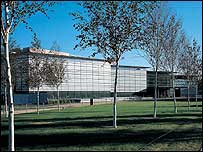
 In pictures


