|
 |
 | | | | | | ||||||||||||||||||||||||||||||||||||||||||||||||||||||||||||||||||||||||||||||||||||||
| | | You are in: UK: Wales | ||||||||||||||||||||||||||||||||||||||||||||||||||||||||||||||||||||||||||||||||||||||||
|
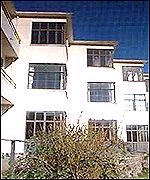
| | Tuesday, 11 February, 2003, 16:47 GMT Hospital asylum centre plans abandoned  The hospital has been dropped from government plans Plans to use a former psychiatric hospital as an accommodation centre for up to 750 asylum seekers have been scrapped. Sully Hospital in the Vale of Glamorgan - which closed three years ago after housing psychiatric patients - had been earmarked by the Home Office as a possible location to house refugees under a trial scheme as part of its asylum reform programme.
It had been one of eight sites to be short listed around the UK, but in May 2002 the government reduced the list to four, shelving Sully from its immediate plans. But, the site was not ruled out of future consideration until Tuesday when the government announced that it was abandoning the Sully Hospital plans. The Home Office announced it was considering using a former naval base in Hampshire and a site in Scotland instead. People living in the community around Sully who campaigned against the proposals have welcomed the announcement. "This has come as good news," said Anthony Ernest, county councillor for Sully. "People were very worried about the situation and there was a terrific public response when the proposals were first announced. "They were worried about the impact that 750 asylum seekers would have on the community.
"There are only a couple of shops, and a school. There are no evening facilitates as such. "And the hospital is sited at the end of a mile long road which is badly serviced by public transport. "Asylum seekers are entitled to a good standard of life but they wouldn't have had that in Sully. "It would have been up to 750 asylum seekers and clearly it would have been overwhelming and people living in Sully felt there would have been extreme pressure on the very modest infrastructure. "I am sure that the people in Sully will welcome the decision by the Home Office to drop Sully Hospital. "And, I am very pleased that the government has appreciated the strength of local feeling against the scheme and have now dropped the idea once and for all," he added. Anger When the proposals were first announced they provoked anger from the local community who campaigned against the proposals. People feared an influx of 750 asylum seekers in a community with a population of about 3,400 would have led to problems. Sully Hospital originally opened in 1936 as a tuberculosis sanatorium and is now a grade two listed building. The council are expected to offer the venue as a temporary alternative while a public inquiry is conducted into the setting up of a dedicated court in Columbus House, Langstone. | |   See also: 14 May 02 | Wales 15 Feb 02 | Wales 11 Feb 03 | Politics 11 Feb 03 | England 20 Feb 03 | Politics 10 Feb 03 | England Internet links: The BBC is not responsible for the content of external internet sites Top Wales stories now: Links to more Wales stories are at the foot of the page. | ||||||||||||||||||||||||||||||||||||||||||||||||||||||||||||||||||||||||||||||||||||||
 | |
|  E-mail this story to a friend E-mail this story to a friend |
| |
| Links to more Wales stories |
| | | ||
 | ||||
 | | Back to top
| ||
| ---------------------------------------------------------------------------------- To BBC Sport>> | To BBC Weather>> | To BBC World Service>> ---------------------------------------------------------------------------------- © MMIII | News Sources | Privacy |




 People were very worried about the situation