|
 |
 | | | | | | |||||||||||||||||||||||||||||||||||||||||||||||||||||||||||||||||||||||||||||||||||||||
| | | You are in: UK: Wales | |||||||||||||||||||||||||||||||||||||||||||||||||||||||||||||||||||||||||||||||||||||||||
|
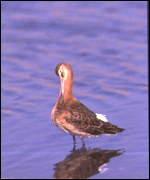
| | Wednesday, 23 October, 2002, 14:06 GMT 15:06 UK Record bird numbers descend on estuary 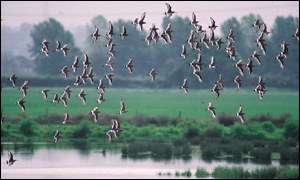 Thousands of godwits have flown to Flintshire Birdwatchers are flocking to north east Wales to witness a record number of black-tailed godwits in the area. The wading birds will spend winter on the Dee Estuary before making a return trip to their breeding grounds in Iceland.
The RSPB reserve at Oakenholt, near Flint, has seen the number of godwits "dramatically rise" since 2000. Around 15,000 of the breed migrate to the UK each year - it is estimated that 4,000 of these have settled in Flintshire. Experts claimed the Dee Estuary is now one of the most important sites in Britain for the animals. John Harrison, assistant warden at the RSPB Dee Estuary reserve, said Flint Castle is the best vantage point to witness them.
"To see a flock of as many as 3,000 being harried by a peregrine falcon is a spectacular but not uncommon sight now at Flint. "Godwit numbers on the estuary have increased dramatically in the last two years," he said. Colin Wells, site manager at Flint, said the godwits are very distinctive. He said they were large wading birds, with long beaks and long legs, which use their beak to probe into the mud to collect worms. Mr Wells said the Dee Estuary has now become a mecca for birdwatchers. "At Flint there are huge numbers of wildfowl and it's a great time to see ducks and species like the peregrine falcons." The RSPB are trying to encourage more people to take up birdwatching. On Sunday, visitors can take part in a guided walk along the Flint foreshore to witness the different species of birds. | |   See also: 11 May 02 | Wales 11 Apr 02 | Wales 11 Dec 00 | Wales 17 Aug 00 | Wales 23 Jul 02 | Wales Top Wales stories now: Links to more Wales stories are at the foot of the page. | |||||||||||||||||||||||||||||||||||||||||||||||||||||||||||||||||||||||||||||||||||||||
| |
|  E-mail this story to a friend E-mail this story to a friend |
| |
| Links to more Wales stories |
| | | ||
 | ||||
 | | Back to top
| ||
| ---------------------------------------------------------------------------------- To BBC Sport>> | To BBC Weather>> | To BBC World Service>> ---------------------------------------------------------------------------------- © MMIII | News Sources | Privacy |