|
 |
 | | | | | | ||||||||||||||||||||||||||||||||||||||||||||||||||||||||||||||||||||||||||||||||||||||||
| | | You are in: UK: Wales | ||||||||||||||||||||||||||||||||||||||||||||||||||||||||||||||||||||||||||||||||||||||||||
|
| | Tuesday, 23 July, 2002, 14:40 GMT 15:40 UK Otter numbers rise 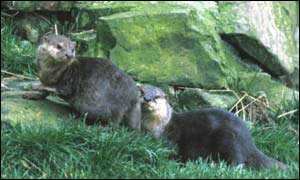 Otter numbers have made a dramatic increase Otter numbers in Wales have risen, reducing the threat to the species, according to an on-going environmental survey. Early indications show that numbers of the river dwelling mammal have grown.
The survey - carried out by the Environment Agency, the Countryside Council for Wales and Wildlife Trusts - covers over a thousand sites in Wales. Michael Evans, conservation manager for the Environment Agency welcomed the findings. "We are seeing good indications of increases in otter numbers but won't have the full results until the end of the season," he said. "We will put together the results and release the full report in the Autumn and see what the next steps are. "But we are already getting involved in work like our awareness and building holts in our habitat awareness schemes."
Results of the survey were revealed at the Royal Welsh show on Monday. Daphne Neville, an otter campaigner from Gloucestershire, believes that the creature is vital to the environment. "Otters are now considered to be one of the most important mammals in the world," she said. "They are the barometer of good health - if you get an otter in the river, it's ok. "If you don't get an otter in the river, then there is something wrong," she said.
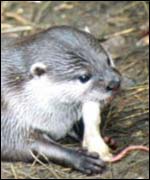
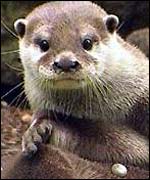
Ms Neville brings hand-reared otters to the Royal Welsh show every year as a way of teaching the public about the creature. "I got involved in 1980 when there had been a government survey to say that the British otter in Wales and England was in a very bad way. "We buy our otters as tiny babies from zoos and bring them up in the house." Despite otters being a protected species, visitors to the Royal Welsh can handle the tame otters brought to the show by Ms Neville. "Because the otter attracts the public, then we can say to the public - when you go down to the river, please keep your dog on the lead, please pick up your plastic litter because wild otters roll in litter. "These are lovable and cuddly and we have got three of them at the moment," she added. Otters have made a dramatic comeback in recent years after virtual extinction in the 1960s. Their decline was linked to pesticides and habitat loss. But the otter's gradual return began with the phasing out of chlorinated hydrocarbon pesticides, which with other chemicals built up in fish including eels, the otter's prey of choice In 1998, the government set a target of restoring otters to all UK rivers by 2010 | | See also:  10 Apr 02 | England 14 Aug 01 | UK 26 Jun 01 | Science/Nature 15 Dec 00 | UK 26 Jun 00 | UK Internet links: The BBC is not responsible for the content of external internet sites Top Wales stories now: Links to more Wales stories are at the foot of the page. | ||||||||||||||||||||||||||||||||||||||||||||||||||||||||||||||||||||||||||||||||||||||||
| |
|  E-mail this story to a friend E-mail this story to a friend |
| |
| Links to more Wales stories |
| | | ||
 | ||||
 | | Back to top
| ||
| ---------------------------------------------------------------------------------- To BBC Sport>> | To BBC Weather>> | To BBC World Service>> ---------------------------------------------------------------------------------- © MMIII | News Sources | Privacy |