 | A graphic showing the development of a cancer tumour 
|
Computer simulation could predict how a cancer tumour may spread in the body, according to scientists in Dundee. The cancer experts have developed a mathematical model that calculates the likely growth of a tumour depending on its shape and location in the body.
It is hoped the model could end the "trial and error guessing games" in cancer treatment.
US scientists at Vanderbilt University in Nashville are currently validating the results from Dundee University.
Dr Sandy Anderson, who developed the model, said it could help with the surgical removal of tumours, and improve strategies for treating cancer as the tumour develops.
He said the model showed a clear relationship between the shape of a cancer tumour and how aggressive it was.
'New era'
Aggressive tumours tend to assume a spidery shape in the model, while more benign growths appear more spherical.
"In the future, this research could help tailor treatment in a patient-specific manner, with the mathematical model being an additional weapon in the armoury against cancer," he said.
The research is part of a �7.6m study involving scientists in Scotland and America.
Vanderbilt University's Professor Vito Quaranta said: "A new era in cancer research has begun.
"With mathematics-driven oncology research, we will be able to determine which drugs will work at which stage."
The findings are published in the December issue of the scientific journal Cell.


 One-Minute World News
  News services


 E-mail this to a friend
  Printable version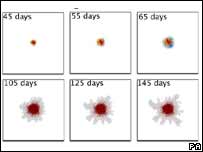
 Enlarge Image


