
|
 |
 | | | | | | |||||||||||||||||||||||||||||||||||||||||||||||||||||||||||||||||||||||||||||||||||||||||||||||||||||||||
| | | You are in: UK: Politics | |||||||||||||||||||||||||||||||||||||||||||||||||||||||||||||||||||||||||||||||||||||||||||||||||||||||||||
|
| | Tuesday, 17 December, 2002, 11:20 GMT CND loses legal fight against Iraq war 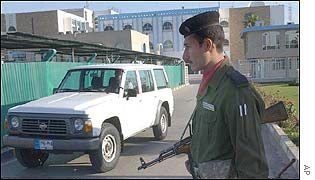 UN weapons inspectors arriving in Baghdad The Campaign for Nuclear Disarmament (CND) has lost its High Court bid to stop the UK going to war with Iraq without a fresh United Nations resolution. Three judges ruled that the court had no power to declare the true interpretation of UN Security Council Resolution 1441 which set out Saddam Hussein's disarmament obligations. During a two-day hearing last week, CND argued that the resolution calling on Saddam to disarm or face "serious consequences" could not be used to justify an invasion. Rabinder Singh QC told the three senior judges that UN Security Council Resolution 1441 set out Saddam Hussein's disarmament obligations, but did not authorise the use of armed force if it was breached. 'Novel claim' The QC had asked Lord Justice Simon Brown, sitting with Mr Justice Maurice Kay and Mr Justice Richards, to rule that CND had an arguable case which should go to a full hearing as a matter of urgency. CND sought a judicial review against Prime Minister Tony Blair, Foreign Secretary Jack Straw and Defence Secretary Geoff Hoon. But Lord Justice Simon Brown described the move as a "novel and ambitious claim". It is believed to be the first time that a UK government has faced a legal challenge over the possibility of a declaration of war. No jurisdiction The judge said CND did not question the government's good faith in committing itself only to take action which was justified by international law. The group had argued there was great public interest in ensuring that the government had judicial guidance on what the law actually was so that it did not embark on military action in the mistaken belief that it was lawful to do so when it was not. But the judge insisted that the court had no jurisdiction to interpret an international instrument which had never been incorporated into domestic law. The court would decline to embark on the determination of an issue if to do so would be damaging to the public interest in the field of international relations, national security or defence. The judge said CND's claim was therefore "non-justifiable". Even if it could be looked in to by the court, there was no good reason for making an advisory declaration because there was no sound basis for believing the government had been wrongly advised as to the true position in international law. The judges refused CND permission to appeal, although it can still seek permission from the Court of Appeal. | |
Internet links:  The BBC is not responsible for the content of external internet sites | |||||||||||||||||||||||||||||||||||||||||||||||||||||||||||||||||||||||||||||||||||||||||||||||||||||||||
| |
|  E-mail this story to a friend E-mail this story to a friend |
| |
|
| | | ||
 | ||||
 | | Back to top
| ||
| ---------------------------------------------------------------------------------- To BBC Sport>> | To BBC Weather>> | To BBC World Service>> ---------------------------------------------------------------------------------- © MMIII | News Sources | Privacy |






