|
 |
 | | | | | | ||||||||||||||||||||||||||||||||||||||||||||||||||||||||||||||||||||||||||||||||||||||||||||||||||||||||||||||||||||||||
| | | You are in: UK: Politics | ||||||||||||||||||||||||||||||||||||||||||||||||||||||||||||||||||||||||||||||||||||||||||||||||||||||||||||||||||||||||||
|
| | Tuesday, 17 December, 2002, 11:55 GMT Labour take a battering 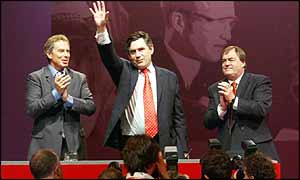 2002 has been a difficult year for Labour
The bizarre and complex story of Cherie Blair's entanglement through her lifestyle adviser with a convicted conman, was only the latest chapter in a sequence of stories in which the personal really was political - and hurt. Cherie Blair's problems with Peter Foster, which had newspapers flinging abuse at one another, as well as politicians, press officers and journalists mud-wrestling, came down essentially to a question of who was lying - the Blairs and Number 10, or their accusers. It included her own bravura, much-argued-about speech in her own defence, variously compared to Shakespeare's Portia and Gloria Gaynor's I Will Survive.
The same could not be said of other high-profile personal dramas, notably the harrying and the fall of Stephen Byers, the transport secretary whose decisive move against Railtrack delighted Labour MPs and infuriated the City, but who was eventually driven from office after numerous allegations of truth-twisting and deceit. He was in a weak position partly because of the perceived failure of the government's transport policy, as the roads became ever more congested and the railway system declined into incompetently-managed obsolescence. That policy was at least partly reversed by new Transport Secretary Alistair Darling, who announced a quick-fix programme of road widening and improvement. 'Not good enough' There were obvious parallels with the sudden resignation of Estelle Morris as Education Secretary, after a long disagreement with Number 10 about university top-up fees and her failure to meet targets on literacy and numeracy that her predecessor David Blunkett had said would cause his resignation.
What was not unique was the failure to meet targets - just as John Prescott's road use targets were not met (again, he had promised to resign but had moved on and did not), so targets on hard drug abuse, street crime, asylum returns and much else became mere embarrassments. In the Comprehensive Spending Review many targets were quietly ditched as the young Blair government's naive optimism came back to haunt harried ministers five years on. The move paralleled a larger struggle going on about the very direction of New Labour. It was inevitably driven by conflicting views from the Chancellor, Gordon Brown, and the prime minister. Economic crisis? Mr Brown was taking some risks with the "Middle Britain" electorate Tony Blair had so carefully nursed for so long: his massive injection of money for the National Health Service, the largest investment in its history, was accompanied by a rise in National Insurance contributions which many voters would eventually feel as a straightforward income tax hike.
Britain did better than most of her competitors but as the year progressed the Treasury's numbers worsened and the economy seemed worryingly unbalanced, with manufacturing in deep trouble while house prices and consumer spending roared on. For Mr Brown, though, the political priority was to save the NHS created by Labour after the war, and to continue his work of quietly and doggedly redistributing money towards poorer working families. He increasingly seemed to view the more market-based and private-sector solutions to the problem of public service delivery as politically unacceptable; during and immediately after the Labour conference in Blackpool, a vicious political struggle about "foundation hospitals" outside the ordinary structure of the NHS raged between Mr Brown and Alan Milburn, the health secretary. Justifying war A wider perspective would remind us that behind these policy problems, the government was managing a world still reshaped by 11 September, with British troops involved in the unsuccessful hunt for Osama Bin Laden, further terror attacks in Africa and Bali, and fierce anti-terrorist legislation at home. Tony Blair's own diplomacy was increasingly focused on helping the United States persuade more reluctant allies that a war against Iraq was justified if Saddam Hussein failed to dismantle his weapons of mass destruction. Though this is one of those issues big enough to split Labour, so far Mr Blair's emphasis on the United Nations has held most MPs with him - however much they worry in private. In some years this catalogue of slipping targets, dissent over policy in the heart of Whitehall, and personal resignations would have meant that the government was en route for an election defeat next time around.
The Tories produced a raft of new policy ideas, united in being sceptical about the centralised state of new Labour, and Mr Duncan Smith won some good headlines for his "quiet man" conference speech. But he rarely cheered his MPs during the weekly bouts of Prime Minister's Questions and suffered from endless rumours of plots and putsches. The Liberal Democrats did score some Commons successes but showed no sign of really breaking through as the main rival for power, an ambition Charles Kennedy proclaimed but has not so far delivered. This was a hectic year and on balance a bad one for the government. Mr Blair is a long way from convincing the public that he can properly modernise and improve public service. His credibility has taken a battering. And his prospects for running a successful euro referendum next year are hardly shining. It was once said that the only good government is a bad one in a hell of a fright. Perhaps New Labour isn't yet quite frightened enough. | |
See also:  16 Dec 02 | Business 13 Dec 02 | Politics 12 Dec 02 | Business 09 Dec 02 | Politics 28 Nov 02 | Politics 19 Nov 02 | Politics Internet links: The BBC is not responsible for the content of external internet sites | ||||||||||||||||||||||||||||||||||||||||||||||||||||||||||||||||||||||||||||||||||||||||||||||||||||||||||||||||||||||||
| |
|  E-mail this story to a friend E-mail this story to a friend |
| |
|
| | | ||
 | ||||
 | | Back to top
| ||
| ---------------------------------------------------------------------------------- To BBC Sport>> | To BBC Weather>> | To BBC World Service>> ---------------------------------------------------------------------------------- © MMIII | News Sources | Privacy |







 This was a hectic year and on balance a bad one for the government