|
 |
 | | | | | | |||||||||||||||||||||||||||||||||||||||||||||||||||||||||||||||||||||||||||||||||||||||||||||||||||||
| | | You are in: UK: Politics | |||||||||||||||||||||||||||||||||||||||||||||||||||||||||||||||||||||||||||||||||||||||||||||||||||||||
|
| | Wednesday, 27 November, 2002, 11:04 GMT E-mail 'shows UK terror plan failings' 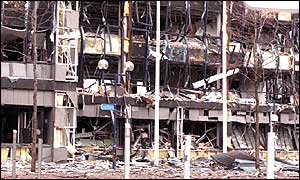 London businesses have been attacked before A leaked Whitehall email shows how unprepared the government is for dealing with a major terrorist incident, according to the Conservatives. The e-mailed letter - sent by an official in the Cabinet office - went out to more than a dozen councils in and around Yorkshire last week.
The revelations have prompted the Tories to renew their call for a new Cabinet minister to deal with domestic security. Details of the leaked email emerged as an independent report, by Lord Carlile, QC, on the working of anti-terrorist measures, raised concerns about the possibility of terror attacks on smaller ports and airports. Evacuation plans Shadow home secretary Oliver Letwin said the e-mail showed there was "not the urgency that is required" to deal with a major emergency. But government sources have dismissed the criticism, claiming that the leaked missive merely illustrates ministers' determination to coordinate effectively their response to any terrorist attack. The e-mail, sent on behalf of Sir David Omand, the government's security and intelligence coordinator, seeks information from emergency planning officers on their state of readiness. It asks if there were plans in place to deal with and dispose of large masses of debris and rubble.
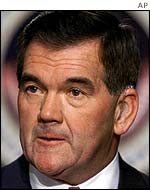
"What areas are covered by these plans, for example, business, district only, full city centre, etc? "Have these plans been reviewed to take account of the high level of threat since 9/11?" 'No sense of urgency' Mr Letwin said the government had been making "muddled announcements" and had showed that "nobody had a very clear idea what to do about the fire services if there was an emergency. He coupled this with "revelations" that the "NHS was under prepared". "I think there is evidence growing ... that there is not the sense of urgency and the degree of systematic coordination one would expect." Mr Letwin said the e-mail asked the recipients that if any other government departments had contacted them with the same questions, to get in touch with the sender. "That seems to suggest that in the first place these questions, which I would have expected to have been asked, say in October, November, after last September, maybe through December and January, are now being asked a year late," he said. "Secondly, that the government coordinator doesn't actually have enough information on a coordinated basis to know which other government department asked what and that suggests that the level of coordination is too low." Airports at risk Mr Letwin argued that ministers were not having informal meetings with colleagues responsible for the security services to talk about the current situation and planning for the future. The Conservatives believe a minister or weighty political figure should take charge of domestic security. But Mr Letwin said he was not suggesting the government appoint a US-style Department of Homeland Security, like the one headed by Tom Ridge. "I think great departments are not the issue here. The issue is to try to ensure that right from the top of government there is a sense of urgency," he said. Meanwhile, Lord Carlile's report on anti-terrorist measures described small airfields and ports as the "soft underbelly" of the UK's war on terror. "The risk of lethal material entering the UK on a light aircraft landing at a busy general aviation airport or remote rural airstrip is real," it said. Lord Carlile, a legal expert, is critical of checks on pilots and air crew, which in many cases are less stringent than those on passengers. "In the modern world of many airlines and international terrorism, it requires little imagination to realise how easily a patient terrorist organisation might place itself among or infiltrate the crew," he said. "Any weakness in port of entry security procedures for crew is a crack in national security." | |
See also:  26 Nov 02 | Politics 20 Jun 02 | Politics Internet links: The BBC is not responsible for the content of external internet sites | |||||||||||||||||||||||||||||||||||||||||||||||||||||||||||||||||||||||||||||||||||||||||||||||||||||
| |
|  E-mail this story to a friend E-mail this story to a friend |
| |
|
| | | ||
 | ||||
 | | Back to top
| ||
| ---------------------------------------------------------------------------------- To BBC Sport>> | To BBC Weather>> | To BBC World Service>> ---------------------------------------------------------------------------------- © MMIII | News Sources | Privacy |