
|
 |
 | | | | | | ||||||||||||||||||||||||||||||||||||||||||||||||||||||||||||||||||||||||||||||||||||||||
| | | You are in: UK: Politics | ||||||||||||||||||||||||||||||||||||||||||||||||||||||||||||||||||||||||||||||||||||||||||
|
| | Thursday, 21 November, 2002, 14:52 GMT Philip Gould: What 'permanent campaign'? 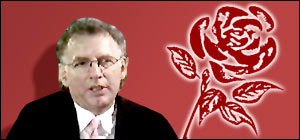 Critics accuse New Labour of running a US-style permanent campaign, obsessed with focus groups. But Philip Gould, Tony Blair's polling adviser, says they have got it wrong.  I do not believe in the "permanent campaign". I do not believe in the "permanent campaign". I do not believe that it exists in the UK, nor do I believe that it should exist. I do not believe that the concept adequately explains what is happening in modern politics. Above all, I believe that its time has passed. The permanent campaign is perhaps not so permanent after all. It is clear enough what is meant by the permanent campaign. Typical descriptions include that it is short-hand for the use of government policy to build and keep public approval in their desire to win office. Or a non-stop process seeking to manipulate sources of public opinion to engage in the act of governing itself. Or that it is the convergence of government and politics. Flawed theory I believe this is a flawed prism through which to understand modern politics, certainly in Britain. This is the consequence of two failures. The first failure is analytical, stemming from an inability to fully understand the new forces that are engulfing politics. Truly these new forces are immense. Globalisation has collapsed barriers of time and distance. Citizen expectations grow insatiably. The demand for empowerment is relentless; deference is declining. The scope and scale of media power has been transformed.
These new forces centre on a paradox: an upward pressure for greater political participation and pluralism, a demand for a new politics of authenticity, transparency and honesty. And a downward pressure for control, competence, discipline and professionalism in the face of an often threatening externality and a relentless media. The permanent campaign feeds off some of these forces, but neglects others. It understands the need for sustained professional campaigning in the face of a relentlessly intrusive media. It is one response to a hostile world. But this analysis is only partial, failing to recognise the other, and perhaps more significant forces of political change - that people want a new politics of empowerment, participation, trust, accessibility, purpose, and perhaps above all of authenticity. It is this failure that is the permanent campaign's first flaw. Seeing only one side of the equation - the need to win, to campaign, to control - it neglects the other: the need to engage, to win trust, to involve. This lack of balance is simply not sustainable in the long term. Labour's unique history The second flaw is methodological. I was taught politics by the political philosopher Michael Oakshott. He believed that politics, because of its intrinsic complexity, could never be explained by social scientific enquiry, only through history.
There are limits to this. You can only understand the current collapse of the Conservative Party if you know its past. You can only make sense of Labour now, including the way that it campaigns, if you look to its past. Political parties are in a sense the revealed secrets of their histories. And each of these histories is unique:
New Labour was always on a journey, with each stage of that journey informing and influencing the next. That is why I called my book The Unfinished Revolution. Too much campaigning It is true that in this historical context professional campaigning, opinion polling, campaigning became vitally important. It was absolutely right that they did. This government has transformed the life chances of many millions.
But it is also true that for a while we allowed the successful techniques of opposition to spill over too often into government. We did campaign too much in the early years of power. But this was a moment on our journey. It didn't work, and we learnt and we changed. For much of the first term and all of the second term, New Labour has not been attempting to converge campaigning and government, but to prise them apart. A new politics We always said that the second term would be different and so it has proved. New Labour is:
Some of you may still not believe me. You may say that New Labour is governed by the principles of the permanent campaign, obsessed with gaining popularity. To them I say tell that to a chancellor who has defied the conventions of a generation and put taxes up to pay for investment. Tell that to a prime minister prepared to lead public opinion on Iraq, on public service reform, on the euro, on reform of university funding - but also listening, facing direct scrutiny from Parliament, press and public. This is the new politics - leading and listening, accessibility and accountability. Driven by conviction The government is doing a lot at the moment and not all of it hugely popular, but all of it driven by a conviction that it is the right thing to do.
The permanent campaign is old politics, it has had its day. A new politics of conviction, honesty, participation and dialogue is replacing it. New Labour led the way as one of the most effective campaigning machines Britain has ever known. It now leads the way again, to a new politics, a new campaigning, a new approach to government. But New Labour cannot do this alone. If the permanent campaign is to be both dead and buried, political candour must be met with media responsibility. We must all of us acknowledge our shared responsibilities to change politics for the better. New Labour, the party of modernisation, has renewed again. But it will not be the last time. "Permanent revolution" is perhaps a better label for what is happening in British politics today than permanent campaigning. Philip Gould is strategic polling adviser to the prime minister and author of The Unfinished Revolution (Little, Brown). Do you agree with Philip Gould? | | See also:  07 Nov 02 | Politics 23 Jan 01 | Politics 19 Jul 00 | Politics 19 Jul 00 | Politics 23 Feb 00 | Labour centenary Internet links: The BBC is not responsible for the content of external internet sites | ||||||||||||||||||||||||||||||||||||||||||||||||||||||||||||||||||||||||||||||||||||||||
| |
|  E-mail this story to a friend E-mail this story to a friend |
| |
|
| | | ||
 | ||||
 | | Back to top
| ||
| ---------------------------------------------------------------------------------- To BBC Sport>> | To BBC Weather>> | To BBC World Service>> ---------------------------------------------------------------------------------- © MMIII | News Sources | Privacy |






