
|
 |
 | | | | | | ||||||||||||||||||||||||||||||||||||||||||||||||||||||||||||||||||||||||||||||||||||||
| | | You are in: UK: Politics | ||||||||||||||||||||||||||||||||||||||||||||||||||||||||||||||||||||||||||||||||||||||||
|
| | Monday, 28 October, 2002, 19:55 GMT Voting plans provoke opposition fire 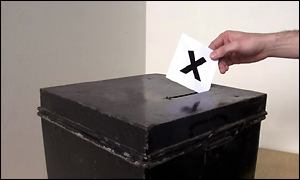 Ministers want to address the problem of low turnouts Proposals to hold forthcoming elections for London mayor, the European Parliament and local authorities on the same day would "restrict debate" and prevent proper scrutiny, say angry Tories. Local Government Minister Nick Raynsford, who unveiled the plans on Monday, claimed the move was to prevent "voter fatigue".
But the new proposals would see the mayoral election, elections to the Greater London Authority and English councils being held on 10 June 2004 to coincide with the European Parliament election. This prompted Tory chairman Theresa May to claim the move would "prevent proper scrutiny of the government's poor record on Europe, London and local government". Internet voting Delaying the polls is one of a number of proposals outlined in a consultation document, launched on Monday by Mr Raynsford and Yvette Cooper, junior minister in the Lord Chancellor's Department. Ms Cooper said staging the European Parliamentary and local elections on the same day could save the taxpayer about �20m. Ministers are also considering plans for voting on Saturday and Sunday, rather than just the traditional Thursdays, in a bid to boost polling turnout. The government is already consulting the public and experts about the merits of internet and telephone voting. Weekend voting would require a change in the law but if approved could be in place by the time of the next General Election. But Sunday voting, which would mean officials having to work that day, is likely to upset some religious groups. Family values John Alexander, of the Keep Sunday Special campaign, had warned he will oppose the plans for Sundays. "This is further pressure on family time and pressure on leisure time, which is being almost obliterated in this country." But Mr Raynsford insisted: "We want to see a modern, efficient electoral system, so that voting for all electors is as convenient and as straightforward as possible." Edward Davey, the Liberal Democrats local government spokesman, argued that turnout plummeted when weekend voting was piloted in Watford two years ago. "The government's latest plans for weekend voting are based more on a wing and a prayer than any firm evidence," he said. "The lessons from the failure at Watford should be learned and new pilots trialled before weekend voting is taken forward. "New methods of voting should be proved to work before large sums of taxpayers' money are spent on them." Pilot schemes In 2000, turnout in the Watford council elections was just 27%, compared to 36% the previous year, despite electors being allowed to vote at weekends. Pilot voting schemes, which also included text message votes, were used in the May local elections. But the Electoral Commission said in August that more pilot projects were needed before the e-voting systems could be used for a national election. Groups interested in the government consultation have until January 2003 to register their opinions. | | See also:  27 Oct 02 | Politics 17 Oct 02 | Politics 21 May 02 | Politics 03 May 01 | Politics 17 Jul 02 | Politics 02 May 02 | Wales 07 Jan 02 | dot life Internet links: The BBC is not responsible for the content of external internet sites | ||||||||||||||||||||||||||||||||||||||||||||||||||||||||||||||||||||||||||||||||||||||
| |
|  E-mail this story to a friend E-mail this story to a friend |
| |
|
| | | ||
 | ||||
 | | Back to top
| ||
| ---------------------------------------------------------------------------------- To BBC Sport>> | To BBC Weather>> | To BBC World Service>> ---------------------------------------------------------------------------------- © MMIII | News Sources | Privacy |





