|
 |
 | | | | | | |||||||||||||||||||||||||||||||||||||||||||||||||||||||||||||||||||||||||||||||||||||||||||||||||||||||||||||||||||||||||||||||||
| | | You are in: UK: Politics | |||||||||||||||||||||||||||||||||||||||||||||||||||||||||||||||||||||||||||||||||||||||||||||||||||||||||||||||||||||||||||||||||||
|
| | Thursday, 1 August, 2002, 12:26 GMT 13:26 UK Mixed verdict on e-voting trials 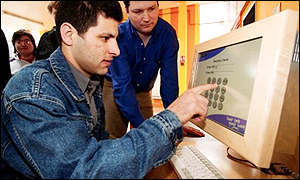 Technology may help boost voter participation Trials of new voting methods have paved the way for internet and telephone voting at a future general election, says the Electoral Commission. The commission has delivered its verdict on the pilot voting schemes, which also included text message votes, used in the May local elections.
The commission also hails the success of all-postal voting trials, which in Stevenage saw turnout rise from 29% two years ago to 52% in May. 'Good first steps' Thirty different council areas experimented with schemes such as postal voting, internet voting, text messaging and weekend voting. The government has already allocated �30m for more pilot schemes. Sam Younger, chairman of the Electoral Commission, said: "The pilots provide a clear indication of how successful postal voting can be in boosting turnout.
Mr Younger described government talk of an e-enabled general election by 2006 as "over-optimistic". Turnout impact He thought it was realistic that an element of electronic voting could be used for the general election after next. There is optimism in some quarters that all-postal votes could be rolled out for next year's elections in the devolved assemblies but the commission are unwilling put an actual timescale on such a move. The report argues that the impact of electronic voting on turnout remains unconvincing.
But Mr Younger argued turnout really depended on whether people were excited by politicians' platforms. Voting methods could only have a marginal impact. "If over the next 10 years you are not offering voters easy, convenient methods of voting that fit in with the way they live their lives, then that could have an impact on voting," he added. There was also evidence that voters did welcome the new polling methods and liked the extra choice. Longer term, e-voting will save the government money, although ministers have been keen to stress it is about accessibility and convenience as well as cost. Fraud concerns Critics of the new systems have accused the government of being gung-ho and ignoring the problems. Some voters have worried about fraud but the commission says it found no hard evidence of such abuse. Ken Ritchie, chief executive of the Electoral Reform Society, raised fears about any systems that took voting away from polling stations. Voters could perhaps be pressured by over-enthusiastic canvassers or might even try to sell their votes, warned Mr Ritchie. Identity rules The commission is looking at such problems and stresses no voting system is immune to fraud. It says further pilots are needed to test security and build public confidence in new methods. Where all-postal votes are tested, says the report, the experiment should be used across whole councils rather than just in individual wards. Alternatives also need to be found to the traditional declaration of identity used for postal votes, which might have deterred some people, it adds. The commission also calls for an electronic register of voters so people can people can use polling stations across their council area and even nationwide. | |
See also:  17 Jul 02 | Politics 17 Jul 02 | Politics 04 Apr 02 | Politics 18 Dec 01 | Business 08 Aug 01 | Politics 05 Feb 02 | Politics Internet links: The BBC is not responsible for the content of external internet sites | |||||||||||||||||||||||||||||||||||||||||||||||||||||||||||||||||||||||||||||||||||||||||||||||||||||||||||||||||||||||||||||||||
| |
|  E-mail this story to a friend E-mail this story to a friend |
| |
|
| | | ||
 | ||||
 | | Back to top
| ||
| ---------------------------------------------------------------------------------- To BBC Sport>> | To BBC Weather>> | To BBC World Service>> ---------------------------------------------------------------------------------- © MMIII | News Sources | Privacy |