|
 |
 | | | | | | |||||||||||||||||||||||||||||||||||||||||||||||||||||||||||||||||||||||||||||||||||||||||||||||||||||||
| | | You are in: UK: Politics | |||||||||||||||||||||||||||||||||||||||||||||||||||||||||||||||||||||||||||||||||||||||||||||||||||||||||
|
| | Friday, 26 July, 2002, 10:45 GMT 11:45 UK Difficult times for Gibraltar's 'doves' 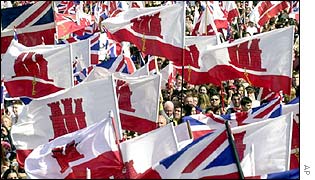 A protest in March was joined by 25,000 people
It takes a brave Gibraltarian to speak out in favour of shared sovereignty between Britain and Spain. Those prepared to accept a deal are in a tiny minority and must be prepared to defend their views against friends and neighbours who take their "Britishness" extremely seriously. They will be hoping their treatment after October's planned referendum on the Rock's future will be far removed from that dished out to their predecessors. The 44 "palomos", or doves, who voted in favour of Spain in 1967's famous poll, were forced to flee their homes in the backlash that followed. Border restrictions The 1967 referendum marked a turning point in the Rock's history.
Border restrictions were increased and eventually led to the complete closure of the frontier crossing. All other means of communicating with the mainland were made as difficult as possible. And even today Gibraltarians can routinely expect lengthy delays as they make the short journey into Spain. Retribution Despite the years of difficulties imposed by Franco and maintained, to a lesser extent, by the governments that followed, Gibraltarians are determined to retain their British identity.
UK Foreign Secretary Jack Straw has already warned Gibraltarians that their "long term prosperity" could be at risk if a deal could not be reached. Chief minister Peter Caruana, who called the unofficial referendum, has every right to feel confident about securing an almost unanimous 'No' to any deal. Mr Caruana said the referendum will show that Gibraltarians must not be forced to accept an end to their 300 year link to Britain. 'Witch-hunt' He said: "You cannot impose history on a people in the 21st century." In March Gibraltarian and British flags sold out when 25,000 of the territory's 30,000 residents took to the streets, to protest against any change to its status. One local resident interviewed by BBC News Online at the time said those who did not turn up risked being shunned socially. "It's a witch-hunt," he said. It was even suggested that those prepared to speak out in favour of shared sovereignty risked having their windows smashed. | |
See also:  26 Jul 02 | Politics Internet links: The BBC is not responsible for the content of external internet sites | |||||||||||||||||||||||||||||||||||||||||||||||||||||||||||||||||||||||||||||||||||||||||||||||||||||||
| |
|  E-mail this story to a friend E-mail this story to a friend |
| |
|
| | | ||
 | ||||
 | | Back to top
| ||
| ---------------------------------------------------------------------------------- To BBC Sport>> | To BBC Weather>> | To BBC World Service>> ---------------------------------------------------------------------------------- © MMIII | News Sources | Privacy |