|
 |
 | | | | | | |||||||||||||||||||||||||||||||||||||||||||||||||||||||||||||||||||||||||||||||||||||||||||||||||||||||||||||||||||||||||||||||||||
| | | You are in: UK: Politics | |||||||||||||||||||||||||||||||||||||||||||||||||||||||||||||||||||||||||||||||||||||||||||||||||||||||||||||||||||||||||||||||||||||
|
| | Friday, 19 July, 2002, 07:26 GMT 08:26 UK 'Catastrophic feud' over terror e-mail 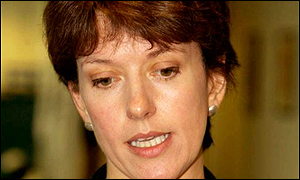 Ms Moore had to quit her job because of her e-mail Special adviser Jo Moore's infamous 11 September e-mail sparked a "catastrophic" Whitehall feud, exposing "serious flaws" in the government's relationship with the civil service. That is the damning verdict of a cross-party committee of MPs, which lifts the lid on the savage in-fighting in Stephen Byers' transport department, which led, in part, to the minister's downfall.
Ms Moore sparked the row by suggesting 11 September was a good day to bury bad news, the Commons Public Administration Committee concludes. But as the row developed, confusion reigned over who was ultimately responsible for Ms Moore's employment, testing established protocols "almost to destruction". 'Generic weaknesses' Ms Moore's unpopularity within the transport department led a number of civil servants to abandon professional standards by leaking information against her, the MPs say. "Management found itself unable to prevent a catastrophic taking of sides at senior level in the department," the committee's report says. And there was a surprising "powerlessness" at the centre of government, which should have been ultimately responsible for employees' conduct.
"The events disclosed a disturbing number of generic weaknesses in the management of government communications. "There is a continuing possibility that similar problems will arise elsewhere in Whitehall, and the government needs to address the issues with vigour if it is to prevent a repetition. "The lessons from these events must be learned," the report says. The MPs call for clearer boundaries between special advisers and civil servants, which should be enshrined in a Civil Service Act. They also recommend a government review of the system for handling such disputes. However, the report says there is nothing wrong with departments employing special advisers, provided they have clearly defined roles. There was "no evidence whatsoever of a concerted attempt to politicise the civil service", it says. 'Unprofessional' On the role of Mr Byers' press chief Martin Sixsmith, the committee says he was faced with a substantial overlap between the work of his own staff and that of a special adviser. "The discontent seems to have inspired a series of leaks probably, but not certainly, initiated from the press office, which were aimed at undermining Ms Moore. "This serious outbreak of unprofessional behaviour was the reason given to us by (Permanent Secretary) Sir Richard Mottram for Mr Sixsmith's departure." On Ms Moore, the report says her activities went beyond those of other special advisers. "The 11 September e-mail aroused the original and the greatest controversy, but other incidents also played their part.
"The pressure she allegedly put on press officers to brief against Bob Kiley London's Transport Commissioner was among a number of incidents perceived as marking her out from other special advisers. "It appeared to constitute a clear breach of public service principles and the special advisers' code. "Ignoring opportunities to pursue their grievances through the proper channels, a small number of DTLR staff leaked both information and misinformation about her activities. "They damaged Ms Moore, but they also damaged the secretary of state, the department and the Civil Service. They were the product of a twisted interpretation of the notion of the public interest." 'No more spin' Committee chairman Tony Wright said: "The real villain was the system. "When a special adviser appeared to cross the boundaries, management did not seem able to cope. "Career civil servants, gripped by a sense of unfairness, took the law into their own hands by leaking to the media. "Everybody was a loser, and the important issues with which the department was dealing were lost in the fog of internal war. "The government should play it straight, and the media should play it fair. The thing that really does need to be buried is 'spin'." All of the main players in the row, including the department's top civil servant Sir Richard Mottram, have now left and the department has been broken up. | |
See also:  09 Jul 02 | Politics 30 Jun 02 | Politics 23 Jun 02 | Politics 04 Jan 99 | Politics 07 Jun 02 | Politics | |||||||||||||||||||||||||||||||||||||||||||||||||||||||||||||||||||||||||||||||||||||||||||||||||||||||||||||||||||||||||||||||||||
| |
|  E-mail this story to a friend E-mail this story to a friend |
| |
|
| | | ||
 | ||||
 | | Back to top
| ||
| ---------------------------------------------------------------------------------- To BBC Sport>> | To BBC Weather>> | To BBC World Service>> ---------------------------------------------------------------------------------- © MMIII | News Sources | Privacy |