|
 |
 | | | | | | |||||||||||||||||||||||||||||||||||||||||||||||||||||||||||||||||||||||||||||||||||||||||||||||||||||||||||||||||||||||||||||||||||||||||||||||||||||||||
| | | You are in: UK: Politics | |||||||||||||||||||||||||||||||||||||||||||||||||||||||||||||||||||||||||||||||||||||||||||||||||||||||||||||||||||||||||||||||||||||||||||||||||||||||||||
|
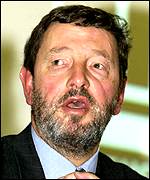
| | Friday, 12 July, 2002, 18:17 GMT 19:17 UK Sangatte to close by March 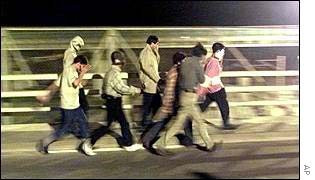 Security at the Channel Tunnel has been tightened The UK and France have agreed a timetable for the closure of Sangatte which will see the refugee camp shut down by March next year at the latest. Speaking after talks in Paris with his French counterpart Nicolas Sarkozy, Home Secretary David Blunkett said the talks were a breakthrough and he hoped the camp could actually be shut by the end of this year.
As well as agreeing to work towards a timetable for closure of the camp, which houses 1,500 people, Mr Blunkett said new security arrangements had also been agreed between the two countries. They include joint immigration controls at Calais similar to those in place at the Eurostar station in Paris, the Gare du Nord.
Tougher measures in Paris saw the number of illegal bids to enter the UK on the train reducing from 150 a week to two or three, he said. Sitting next Mr Sarkozy, the home secretary also said that they were both determined to see freight traffic returning to normal out of Calais's Frethun rail depot by September. They would achieve this by heightened security at the depot, he said. Mr Letwin said Mr Blunkett should have restored an earlier bilateral agreement under which asylum-seekers coming from France to the UK could immediately be returned. "Nothing Mr Blunkett has said today offers any hope that order will be restored to the asylum system," he said. "It is yet another example of the government's abject failure at the negotiating table." The controversial Sangatte camp is run by the Red Cross and used by asylum seekers as a staging post to enter Britain. Mr Blunkett said: "The timetable [for closing Sangatte] will range from the last quarter of this year to the first quarter of next year, and will depend on the progress we can make putting in place decisions in the UK which will discourage people from trying to seek unjustified asylum, and measures to discourage people going to Sangatte." "After so many years of disputes and difficult tremendous controversy over Sangatte, we are on the verge of not only finding a solution in relation to Sangatte, but on the real difficulty of people using clandestine entry into the UK as an alternative to proper, legitimate economic migration. I am prepared to do my bit." Risking their lives Many are prepared to risk their lives by attempting to enter Britain illegally on trains coming through the Channel Tunnel. The agreement between the two ministers is credited in part to legislation currently passing through the House of Lords which the French believe will remove some of the incentives to asylum seekers to come to the UK. Once Mr Blunkett's Nationality, Asylum and Immigration Bill reaches the statute book the French government will be ready to close Sangatte. The home secretary said he had already made provision within the legislation so the Bill can move forward quickly and be in place by mid-October. Protests Mr Blunkett and Mr Sarkozy met last month in London but failed to agree dates on closure and the Frenchman said the issue was "poisoning" Anglo-French relations. Mr Sarkozy conceded shutting the camp was an objective, but first demanded broader action on illegal immigration. Meanwhile, UK Government efforts to house 3,000 asylum-seekers in a network of accommodation centres have suffered a major setback. There were local protests when the first three sites were identified. And two councils in Oxfordshire and Nottinghamshire rejected planning permission on Thursday evening, with a third in Worcestershire expected to follow suit. The government may appeal but the centres are unlikely to be open as planned, on trial, by the end of the year. | |
See also:  12 Jul 02 | Politics 23 May 02 | UK 11 Jul 02 | Politics 11 Jul 02 | UK 12 Jul 02 | England 06 Jul 02 | UK 25 Jun 02 | UK 17 Jun 02 | UK 17 May 02 | Europe Internet links: The BBC is not responsible for the content of external internet sites | |||||||||||||||||||||||||||||||||||||||||||||||||||||||||||||||||||||||||||||||||||||||||||||||||||||||||||||||||||||||||||||||||||||||||||||||||||||||||
| |
|  E-mail this story to a friend E-mail this story to a friend |
| |
|
| | | ||
 | ||||
 | | Back to top
| ||
| ---------------------------------------------------------------------------------- To BBC Sport>> | To BBC Weather>> | To BBC World Service>> ---------------------------------------------------------------------------------- © MMIII | News Sources | Privacy |