
|
 |
 | | | | | | |||||||||||||||||||||||||||||||||||||||||||||||||||||||||||||||||||||||||||||||||||||||||||||||||||||||||||||||||||||||||
| | | You are in: UK: Politics | |||||||||||||||||||||||||||||||||||||||||||||||||||||||||||||||||||||||||||||||||||||||||||||||||||||||||||||||||||||||||||
|
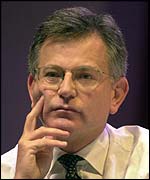
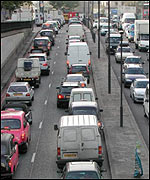
| | Monday, 27 May, 2002, 11:21 GMT 12:21 UK Drivers 'to win' in transport shake-up Mr Byers admits cars will dominate for some time Transport Secretary Stephen Byers is hastily rewriting the government's 10-year transport strategy in favour of motorists, following stinging criticism by a group of senior MPs. Congestion will be tackled with more small-scale road schemes, the introduction of more one-way systems and faster responses to accidents. Under-fire Mr Byers is expected to publish the proposals in a revised version of the transport blueprint due in July. On Sunday a damning report by the Commons transport select committee said the �180bn plan unveiled two years ago was vague, confused and poor value for money. Tram lines Conceding that cars would remain the main form of transport for years to come, Mr Byers will say the growth in the economy since the original plan was published has increased traffic on the road. He is expected to say that motorists cannot be expected to give up their cars until public transport is improved. Mr Byers will stick to key targets, including more tram lines in cities, a 50% rise in train use and a 10% increase in bus journeys. He has faced criticism that the transport blueprint is "incoherent" and "incomprehensible". But Mr Byers told the Independent: "The plan was always a living document. It was not set in concrete. "There are new pressure points, new priorities." 'Foreseeable future' Speaking earlier to the BBC a defiant Mr Byers said he stood by the plan as it was not intended to give intricate detail but was merely a "framework" which set targets for other agencies to meet.
It claimed the government was fearful of making an enemy of the motorist. But Mr Byers said: "The reality is that cars will remain the mode of travel for most journeys for the foreseeable future. "It would be a mistake to ignore the fact that 80% of journeys are made by people in their cars." His words were welcomed by Brian Gregory, chairman of the Association of British Drivers. "The government has finally realised that it was embarking on a path which was going to be exceedingly unpopular with 30 odd million road users and that would be expensive at the ballot box," he told BBC Radio 4's Today programme. No resignation Mr Byers said what was needed was a better public transport system, so motorists would then have a real choice. But John Mackie, chief executive of the British Venture Capital Association, told Today that the decision to place Railtrack into administration had "undermined confidence" in private sector investment in government sponsored projects.
Mr Byers said the 10 year plan was never intended to include actual suggestions about how to end road and rail chaos in Britain. Instead it was to set targets for other bodies - such as the Highways Agency and the Strategic Rail Authority - who would then have to come up with how they were to be met. He dismissed earlier calls from Shadow Transport Secretary Theresa May for his resignation. Power She said: "The report confirms what anyone who travels on our roads or rail network already knows - that Labour are failing to deliver on any of their promises." In the harshly-worded report there was also criticism that the much-mooted scheme for up to 20 cities and towns to ask drivers to pay to enter their centres is dropped.
In London - where a �5 congestion charge is on the cards - the decision to implement it is entirely down to the Mayor Ken Livingstone, but in the regions the DTLR has that power. Another key criticism was the government's over-optimism that private sector investment would be enough to fund the modernisation and improvement of the railways. Committee chairman, Labour backbencher Gwyneth Dunwoody, said: "The United Kingdom needs a long-term achievable strategy desperately. "The sooner we make up our minds about what we want and how to get it, the better it will be for everyone." On traffic jams, the report said: "The government's approach to motoring costs is incomprehensible". The report was welcomed by Friends of the Earth who said more money must now be found for rail and other forms of public transport. | |
See also:  26 May 02 | UK Politics 19 May 02 | UK 02 May 02 | UK 25 Feb 02 | UK 26 May 02 | UK Politics Internet links: The BBC is not responsible for the content of external internet sites | |||||||||||||||||||||||||||||||||||||||||||||||||||||||||||||||||||||||||||||||||||||||||||||||||||||||||||||||||||||||||
| |
|
| | | ||
 | ||||
 | | Back to top
| ||
| ---------------------------------------------------------------------------------- To BBC Sport>> | To BBC Weather>> | To BBC World Service>> ---------------------------------------------------------------------------------- © MMIII | News Sources | Privacy |








 TALKING POINT
 UK in gridlock