
|
 |
 | | | | | | ||||||||||||||||||||||||||||||||||||||||||||||||||||||||||||||||||||||||||||||||||||||||||||||||||||||||||||||||||||||||||||||||||||
| | | You are in: UK: N Ireland | ||||||||||||||||||||||||||||||||||||||||||||||||||||||||||||||||||||||||||||||||||||||||||||||||||||||||||||||||||||||||||||||||||||||
|
| | Monday, 30 September, 2002, 12:24 GMT 13:24 UK Analysis: NI census figures 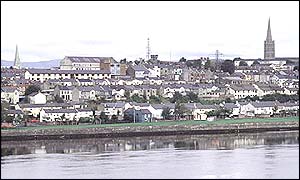 Derry city shows the highest rate of growth
The essential message from the Northern Ireland census results that were released on Monday is one of population growth.
The enumerated population in April stood at 1,685,267 a 5% increase on 1991 and the highest population figure since the census of 1841 - just before the famine in Ireland - and up almost a quarter since 1951.
The increase has been driven mainly by natural increase of 87,000. Migration, which historically has played a major role in limiting population growth through relatively high rates of out-migration, was broadly in balance over the decade since 1991 with a net estimated outflow since 1991 of only 5,000. Those leaving Northern Ireland tend to be younger - in their 20s - while those entering Northern Ireland tend to be older in their 30s and 40s. Age structure Northern Ireland's age structure has also been changing. In 1951, children under 16 represented 29% of the population but the figure was 24% in 2001. Those of pensionable age have increased from 12%, 50 years ago, to 16% now. The gender balance in the population shows increasing numbers of females over males in the older age bands. This is especially notable in those aged over 50. For example, while there are almost equal numbers of men and women aged 45-49, there are almost 8,000 more women than men aged 70-74. Counting difficulties The population growth is reflected across all areas of Northern Ireland except the city of Belfast where the population has fallen by about 5% since 1991. One of the difficulties of comparing censuses lies in where students are counted. In 1991 they were counted at home whereas in 2001 they were counted at their term addresses.
This results in Belfast in 2001 recording an in-migration of those in their early 20s. The overall direction, however, is of the city's population declining. The population shift is reflected in some of the highest rates of population growth in the suburban areas of Lisburn, North Down, Castlereagh and Ards. Increasing the city's boundary encases the inner part of the urban area and does not reflect the true geographical expression of the city. The current review of local government will undoubtedly have to take this into account. The growth of population in even rural parts of Northern Ireland reverses the population flows of the past. Religious divisions Not included in Monday's results is the breakdown of the population in terms of the religious divide. The census in Northern Ireland included a voluntary question on religion. The question format was altered in 2001 to try to capture increasing numbers of those not answering the question. These figures will be released in coming months and will no doubt provide considerable material to debate the changing balance and the possible political consequences. Current estimates however, suggest the Catholic proportion is likely to lie between 44-46% - an historic high. | |
See also:  30 Sep 02 | N Ireland 29 Apr 01 | N Ireland 09 Apr 01 | UK Internet links: The BBC is not responsible for the content of external internet sites Top N Ireland stories now: Links to more N Ireland stories are at the foot of the page. | ||||||||||||||||||||||||||||||||||||||||||||||||||||||||||||||||||||||||||||||||||||||||||||||||||||||||||||||||||||||||||||||||||||
| |
|  E-mail this story to a friend E-mail this story to a friend |
| |
| Links to more N Ireland stories |
| | | ||
 | ||||
 | | Back to top
| ||
| ---------------------------------------------------------------------------------- To BBC Sport>> | To BBC Weather>> | To BBC World Service>> ---------------------------------------------------------------------------------- © MMIII | News Sources | Privacy |









