|
 |
 | | | | | | |||||||||||||||||||||||||||||||||||||||||||||||||||||||||||||||||||||||||||||||||||||||||||||||||||||||||||||||||||||
| | | You are in: UK: N Ireland | |||||||||||||||||||||||||||||||||||||||||||||||||||||||||||||||||||||||||||||||||||||||||||||||||||||||||||||||||||||||
|
| | Friday, 26 July, 2002, 11:26 GMT 12:26 UK Counting the cost of NI virus 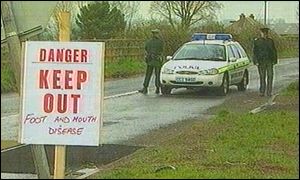 Four cases of the disease were confirmed in NI
The foot-and-and mouth outbreak in Northern Ireland might have been avoided if there had been better policing of sheep imports by the Department of Agriculture. However, a report by business advisors PricewaterhouseCoopers also compliments the department on its performance during the outbreak last year. It says an immediate ban on trade movements with Britain cocooned the province from a potentially catastrophic foot and mouth epidemic. The review concludes that poor controls, combined with a lax attitude to farm biosecurity, created the conditions that made the outbreak in Northern Ireland almost inevitable once the disease had arrived in Britain.
The report draws attention to what it calls a "systematic abuse of animal import and licensing legislation". It particularly notes the abuse of procedures governing "direct for slaughter" sheep imports from Britain into Northern Ireland, which facilitated illegal smuggling of sheep to the Republic of Ireland. More than 60% of the lambs shipped to the province from Britain failed to arrive at their designated meat plant. The suspicion is that smuggling and illegal movements of sheep left the local farming industry vulnerable to the spread of the disease. The speed in introducing movement controls on animals and restricting countryside activities is recognised as being crucial in limiting the extent of the outbreak. The report however highlights problems in the early days of the cull with a shortage of suitable weapons and ammunition. Compensation There was also a shortage of vets who had been trained to cull animals. The report also deals with the human dimension of the cull and recommended that veterinary officials should be trained in dealing with farmers facing the trauma and distress of having their animals slaughtered. The overall conclusion is that the culling and disposal went relatively smoothly. In all just over 50,000 animals were destroyed, more than 80% of them were sheep, and a total of �7.5m was paid to farmers in compensation. The overall cost of the outbreak to government departments in Northern Ireland is put at �24m with staff costs amounting to �11.5m.
Other costs to the industry including an export ban on meat and dairy products are estimated at �5.5m. The report does not focus on the tourism sector where losses resulting from the foot and mouth outbreak have been estimated at as much as �100m. The review estimates farmers experienced a net gain of �6.8m as a consequence of foot and mouth disease. This, it says, is because of a currency compensation package, which in the absence of foot and mouth disease was unlikely to have been paid. The report says the agri-money package more than offset the impact of the outbreak. It also recognises the experience of farmers who found a shortfall between the compensation they received for slaughtered animals and the cost of re-stocking. It is suggested that consideration be given to revising valuations at the time of restocking. The uncovering of sheep subsidy fraud during the cull in south Armagh was also recognised. Of the 93 farms involved, 58 had fewer sheep than they had been claiming subsidies on. Sixteen had no sheep at all. No prosecutions were proceeded with due to a loophole in the regulations which has now been addressed by the Department of Agriculture. Looking to the future the report calls for the development of an all-island animal health strategy with a revised contingency plan to deal with any future outbreak of foot and mouth disease. | |
See also:  26 Jul 02 | N Ireland 16 Jul 02 | N Ireland 19 Apr 01 | N Ireland 30 Mar 01 | N Ireland Internet links: The BBC is not responsible for the content of external internet sites Top N Ireland stories now: Links to more N Ireland stories are at the foot of the page. | |||||||||||||||||||||||||||||||||||||||||||||||||||||||||||||||||||||||||||||||||||||||||||||||||||||||||||||||||||||
| |
|  E-mail this story to a friend E-mail this story to a friend |
| |
| Links to more N Ireland stories |
| | | ||
 | ||||
 | | Back to top
| ||
| ---------------------------------------------------------------------------------- To BBC Sport>> | To BBC Weather>> | To BBC World Service>> ---------------------------------------------------------------------------------- © MMIII | News Sources | Privacy |