|
 |
 | | | | | | ||||||||||||||||||||||||||||||||||||||||||||||||||||||||||||||||||||||||||||||||||||||||||||||||||||||||||||||||
| | | You are in: UK: N Ireland | ||||||||||||||||||||||||||||||||||||||||||||||||||||||||||||||||||||||||||||||||||||||||||||||||||||||||||||||||||
|
| | Wednesday, 24 July, 2002, 19:00 GMT 20:00 UK 'A crisis deferred' 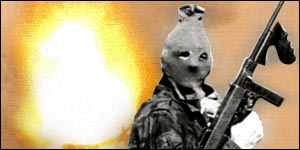 Violence in Northern Ireland has continued
Persistent rioting, paramilitary punishment beatings, a cold-blooded sectarian murder, savage attacks with pipe-bombs and petrol bombs on the homes of the innocent in areas where Catholic and Protestant streets are side-by-side. Who would have thought the news in Northern Ireland would sound - and feel - like this so long into the peace process? The process of moving from violence to peace in Northern Ireland was always perhaps going to involve a messy and morally ambiguous transition in which organisations with armed wings would settle into constitutional politics. At the heart of the ambiguity were wildly differing interpretations of what particularly the republican movement meant by a ceasefire.
Sinn Fein and the IRA always appeared to interpret the word as referring to a cessation of specific operations that in their eyes did not cast doubt on the legitimacy of what they had done in the past. Unionists saw things in much more absolute moral terms. Republicanism in their eyes had to turn from terrorism to electoral politics swiftly and irreversibly if it was to be a worthy partner in power-sharing. The government was happy to preside over a peace process in which both parties clung to their own interpretations of "ceasefire" but continued to work side-by-side. Colombia Tony Blair and John Reid showed last year their patience on the matter was not inexhaustible by ruling the Ulster Defence Association, which is conducting a squalid campaign of sectarian murder and intimidation in North Belfast, was no longer on ceasefire. But many unionists accuse the government of applying a different standard to the IRA's ceasefire simply because without the dialogue between republicanism and the British authorities, there would not be a peace process. So evidence the IRA was up to no good in Colombia and accusations it was behind the burglary of the Castlereagh security base were not met by political sanctions against Sinn Fein. They can point with some justice to figures showing loyalist paramilitaries are plainly behind more violence on the streets, and of course to the fact they are in the power-sharing institutions because people voted for them. Fragile But the Ulster Unionists are worried about the prospect of going into assembly elections next year as partners of Sinn Fein when they know Protestant voters, increasingly unenthusiastic about the whole process, may turn in droves to the anti-agreement Democratic Unionist Party. There are elements of the familiar about the government's solutions - more troops on the streets in North Belfast. There is also a promise to be more rigorous about the future definition of a ceasefire. But there is the promise of a more rigorous set of criteria to be applied to ceasefires with the threat of sanctions to follow if, for example, the IRA is caught spying on potential targets for assassination. The government's statement has about it the air of a crisis deferred because it is an attempt to placate unionists without alienating republicans. The summer holidays might provide a breathing space - but when politicians reassemble for the autumn here, devolution will look as fragile as ever. | |
Internet links:  The BBC is not responsible for the content of external internet sites Top N Ireland stories now: Links to more N Ireland stories are at the foot of the page. | ||||||||||||||||||||||||||||||||||||||||||||||||||||||||||||||||||||||||||||||||||||||||||||||||||||||||||||||||
| |
|  E-mail this story to a friend E-mail this story to a friend |
| |
| Links to more N Ireland stories |
| | | ||
 | ||||
 | | Back to top
| ||
| ---------------------------------------------------------------------------------- To BBC Sport>> | To BBC Weather>> | To BBC World Service>> ---------------------------------------------------------------------------------- © MMIII | News Sources | Privacy |