1 of 9 Claud Freeman is head of Concorde engineering at British Airways. You can listen to him describe the ups and downs of his job using the panel above right. Click through the pictures for a glimpse behind the scenes, past and present.
2 of 9 The original design drawings for Concorde were in French and English, and used both centimetres and inches. There were no major problems when it came to fitting everything together.
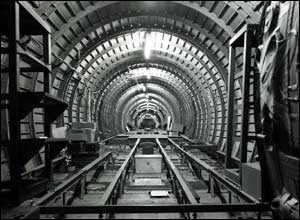
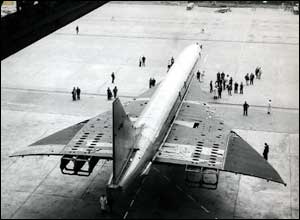
3 of 9 Components built by the UK included the nose, forward fuselage, fin, rudder and air intakes. The French contribution included the landing gear and main wing sections.
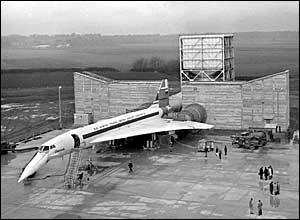
4 of 9 This picture, taken in February 1968 at Toulouse-Blagnac airport in France, shows Concorde prototype 001 in front of an engine-testing system.
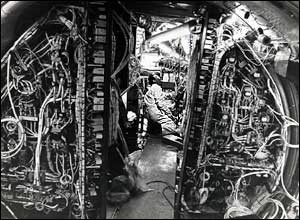
5 of 9 Concorde was one of the first aircraft to use fly-by-wire technology, which involves electronic instead of mechanical controls. If laid out its wiring would stretch many miles.
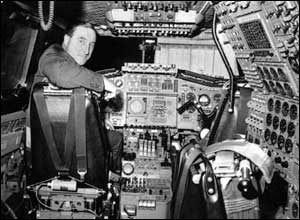
6 of 9 Brian Trubshaw, chief UK test pilot for Concorde, sits in a prototype cockpit in 1970 with a weather radar in the centre console, later ditched for more conventional instruments.
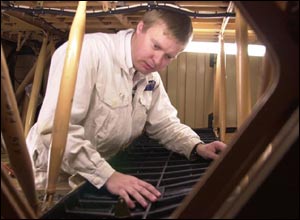
7 of 9 The fuel tanks were fitted with tough Kevlar linings after the Paris crash to prevent ruptures.
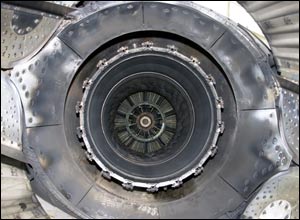
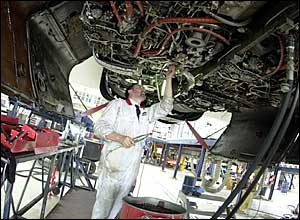
8 of 9 Concorde's engines are unique in civilian aircraft for using reheats, when fuel is injected directly into the jet pipe and ignited to give extra thrust.
9 of 9 The total time spent maintaining Concorde is between five and eight times that spent on a typical Boeing 747.


 One-Minute World News
  News services
 E-mail this to a friend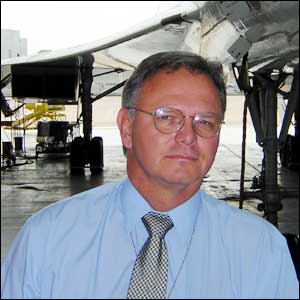


 In pictures