By Eleanor Williams
BBC News, Portsmouth |
  Alice Gauntlett says she would love to see Pompey play again at Wembley |
In September 1939, 19-year-old Alice Gauntlett said an emotional farewell to her husband Gordon as he went off to war. It was a very different day to the euphoria the two of them felt five months earlier when, as newlyweds, they travelled to Wembley from their home in Portsmouth to see their football team bring home the FA Cup trophy. "It was a lovely day - a day I shall never forget," Mrs Gauntlett says, smiling. Now 88 years old, she remembers the 29 April 1939 as if it was yesterday. "I was wearing a blue dress and a blue and white scarf," she says. She also remembers being given a box to stand on to get a better view and her husband had a cracker he spun in his hand while they cheered Pompey on. "Everyone was going: 'Come on the blues, come on the blues!'," Mrs Gauntlett recalls. In the build up to the FA Cup Final that year, Wolverhampton Wanderers, who were lying second in the league table, were the favourite to win.  | Gordon Gauntlett left Portsmouth to fight in WWII in September 1939 
|
But Pompey, who were facing relegation at the time, pulled out all the stops to win 4-1. "I was hoarse, my voice had gone," Mrs Gauntlett says laughing while describing the all-night-long celebration that followed. "There was no trouble - just singing and dancing." After the game finished many Pompey supporters, including Mr and Mrs Gauntlett, gathered in the Elephant and Castle public house, where they celebrated until the early hours. They even nearly missed the last train home from London. "This landlord said: 'You all Pompey supporters, you've got to get the train, the last train is the milk train. If you want to get home you've got to go!'. "We were all going to Waterloo Station singing and dancing." When they arrived in Portsmouth in the early hours people were still out in the streets celebrating. But Mr Gauntlett, who worked for a wholesale newsagent, had to take his wife home and then go straight to work.  Mrs Gauntlett has passed on her passion for Pompey to her family |
"I went straight to bed of course," Mrs Gauntlett says. By September that year, war had broken out and Mr Gauntlett was sent to France, where he ended up on the beaches of Dunkirk. He survived the battle by swimming to a rescue boat and ended up in hospital in Aldershot. But at home in Portsmouth, Mrs Gauntlett had received a letter saying her husband was missing in action. She thought he had been killed. Until he turned up again in Portsmouth. "He pinched a sergeant's uniform cause he'd had enough and walked out," Mrs Gauntlett says as she describes how he sneaked out of hospital and returned home. But he was soon sent back to France, where he "was lucky" to end up as a cook at a chateau used by the allied forces instead of at the frontline. Mr Gauntlett, who remained a Pompey supporter all his life, died in 1997. No ticket Their son Gordon Jnr inherited his parents love for the football club. He was one of the brains behind Portsmouth FC's SOS campaign in the 1970s - an action group trying to raise about �100,000 to get the club out of debt - and later became one of the directors of the club. "We used to go every Saturday they were playing at home. I couldn't go to the away games because I had young children at home." And despite being nearly 90, Mrs Gauntlett remains a faithful Pompey supporter and follows every game they play, either on TV or the radio. She says it would be her dream to be able to return to Wembley for Pompey's the FA cup final on 17 May against Cardiff City, Pompey's first since the 1939 win. But because the 25,000 tickets available for Pompey supporters were reserved for club members and season ticket holders, Mrs Gauntlett has been unable to get a ticket. "I've never heard of anyone who goes to football at 88," she says. "But when I was asked if I would go, I said: 'Of course I would go'. "But I can't get a ticket."
|  Breakfast


 E-mail this to a friend
  Printable version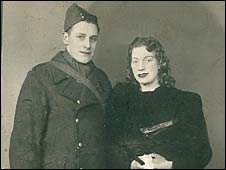
 Enlarge Image
 BBC News


Bookmark with:
What are these?