
|
 |
 | | | | | | ||||||||||||||||||||||||||||||||||||||||||||||||||||||||||||||||||||||||||||||||||||||
| | | You are in: UK: England | ||||||||||||||||||||||||||||||||||||||||||||||||||||||||||||||||||||||||||||||||||||||||
|
| | Tuesday, 4 February, 2003, 10:41 GMT Woman gives birth after 19 miscarriages  Niamh weighed 3lbs 4ozs when she was born A woman who suffered 19 miscarriages while trying to start a family has finally given birth to a daughter. Annette Quinlan, 42, has a rare condition which means her immune system attacks a growing embyro and destroys the placenta. She had tried without success to have a child for 14 years before giving birth to Niamh through Caesarean section after undergoing steroid treatment. Niamh was born a month prematurely and weighing 3lb 4ozs at Liverpool Women's Hospital on 15 January.
"I was prepared to do it because I wanted a baby so much. "When they held Niamh up, and there she was after all that waiting, it was the best moment of my life. "She was definitely worth waiting for," she told the Liverpool Daily Post Niamh's birth marks a happy end to Mrs Quinlan's 14 year struggle to have a child. She first fell pregnant shortly after getting married but lost the baby at seven weeks. 'Killer cells' After two more miscarriages she gave away the vests and booties she had bought for her child. After suffering seven more miscarriages she was referred to the Liverpool Women's Hospital where doctors discovered she had a very high number of "killer cells" lining her uterus. She was given the powerful steroid Prednisolene to suppress her immune system as part of research into the condition, which affects less than 1% of women. Despite miscarrying several more times, each pregnancy lasted a bit longer but after losing twins in 2002 she and husband Alan, 46, debated whether to stop trying. She added: "I have to admit I was beginning to think that time was running out for me. 'Extremely rare' "But I thought that what I was going through might help other mothers who miscarry in the future, even if it didn't help me." Eventually she fell pregnant and gave birth to Niamh eight days after being admitted to hospital with high blood pressure. Ruth Bender Atik, national director of the Miscarriage Association, said miscarriage was quite common but recurrent miscarriages were rare. She added: "It is... extremely rare for a woman to suffer 19 miscarriages. "This is largely because the cause has been diagnosed and possibly treated or because the woman has decided to stop trying." | |   See also: 06 Aug 02 | Politics 13 Jul 02 | Health 06 Sep 01 | Health Internet links: The BBC is not responsible for the content of external internet sites Top England stories now: Links to more England stories are at the foot of the page. | ||||||||||||||||||||||||||||||||||||||||||||||||||||||||||||||||||||||||||||||||||||||
 | |
|  E-mail this story to a friend E-mail this story to a friend |
| |
| Links to more England stories |
| | | ||
 | ||||
 | | Back to top
| ||
| ---------------------------------------------------------------------------------- To BBC Sport>> | To BBC Weather>> | To BBC World Service>> ---------------------------------------------------------------------------------- © MMIII | News Sources | Privacy |




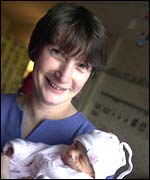
 When they held Niamh up, and there she was after all that waiting, it was the best moment of my life