
|
 |
 | | | | | | ||||||||||||||||||||||||||||||||||||||||||||||||||||||||||||||||||||||||||||||||||||||||||||||||||||||||||||||||||
| | | You are in: UK: England | ||||||||||||||||||||||||||||||||||||||||||||||||||||||||||||||||||||||||||||||||||||||||||||||||||||||||||||||||||||
|
| | Wednesday, 11 December, 2002, 19:30 GMT The road ahead for UK transport 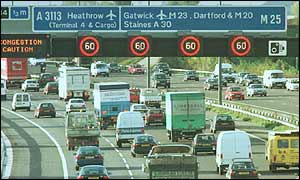 What is the answer to road congestion?
The last five years have been marked by something of a truce in the war between the pro and anti-roads lobby. There have been few tree-top protests, no sign of Swampy. The reason is that, instead of laying tarmac, the government's been doing a lot of thinking about road-building. In 1999 it commissioned a series of studies - 33 in all - examining transport in the most congested parts of the country. The idea was that transport experts would weigh up proposals to build or widen roads, with proposals to improve local rail services, buses or trams.
In the case of the South West for example, the government had to decide whether to spend its money turning the jammed A303 route to Devon into a dual carriageway, or to pump money into improving the Great Western rail lines. In that part of the world the row over the planned road through the picturesque Blackdown Hills in Devon attracted most of the attention. The government has shelved the plans for now, but the "dualling" of the A303 will go ahead. Holistic approach Environmentalists and public transport campaigners are far from happy with the outcome of these studies. They were hoping this "holistic" approach would lead the government to realise what they had always been saying - that better buses and trains have to come before road widening. The government doesn't see it like. Ministers say the economy is expanding and therefore they have to provide the means for more people to get around - whether by car or train. Its sounds a little like the Conservatives' much criticised "predict and provide" policy that led to extravagant plans for new roads.
It is a small step back towards the pro-roads side of the debate. Mr Darling's critics wonder how many more steps he might take in that direction - he still has more than 20 multi-modal study reports on the way. But the big question is what effect adding lanes will have. For years now academics have warned of what they call "induced traffic growth". Traffic jams Put bluntly, if you build an extra lane along a road, more people will want to use it. This suggests any extra tarmac will eventually become saturated with cars and lorries, before congestion itself puts drivers off again. Dr David Begg, chairman of the government's integrated transport commission, believes the only way to stop this effect is to charge motorists for using the most popular roads. Alistair Darling is not keen for now. Forget the Poll Tax, the Congestion Tax has "vote loser" written all over it. The debate about the alternatives are easier to resolve. Most people want to see more public transport. The government appears to see trams in particular as the answer to inner city traffic jams. But massive improvements to the railways seem less popular. The Strategic Rail Authority is rapidly running out of money for new tracks and train services. And Alistair Darling's speech in the Commons contained no new commitments for major rail schemes. | |
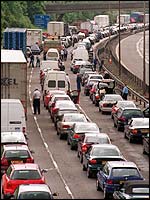
 Transport hell Transport hellAre wider roads the way to beat traffic jams? 
 See also: 10 Dec 02 | England 10 Dec 02 | England 09 Dec 02 | England 10 Dec 02 | England 26 Nov 02 | England 12 Nov 02 | England Internet links: The BBC is not responsible for the content of external internet sites Top England stories now: Links to more England stories are at the foot of the page. | ||||||||||||||||||||||||||||||||||||||||||||||||||||||||||||||||||||||||||||||||||||||||||||||||||||||||||||||||||
| |
|  E-mail this story to a friend E-mail this story to a friend |
| |
| Links to more England stories |
| | | ||
 | ||||
 | | Back to top
| ||
| ---------------------------------------------------------------------------------- To BBC Sport>> | To BBC Weather>> | To BBC World Service>> ---------------------------------------------------------------------------------- © MMIII | News Sources | Privacy |







 TALKING POINT
 42.61%
  57.39%