
|
 |
 | | | | | | ||||||||||||||||||||||||||||||||||||||||||||||||||||||||||||||||||||||||||||||||||||||||||||||||||||||||||||||||||||||
| | | You are in: UK: England | ||||||||||||||||||||||||||||||||||||||||||||||||||||||||||||||||||||||||||||||||||||||||||||||||||||||||||||||||||||||||
|
| | Wednesday, 20 November, 2002, 13:20 GMT Police drive to reduce drugs crime 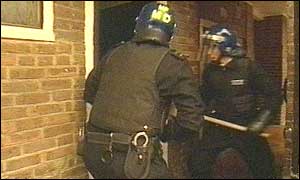 Police raid suspected crack den in Camberwell The Metropolitan Police has said it will carry out more raids on drug dens and offer more treatment to criminals who are drug addicts. The two-pronged attack on the problem of crime fuelled by drugs is part of the force's new three-year drugs strategy for 2003 to 2006. Its main aims are to reduce supply by targeting dealers and to lessen demand by working with the community and sending more offenders to treatment schemes rather than jail. The plan was launched with a series of raids on Tuesday night in areas of London most affected by cocaine, crack cocaine and heroin. Intelligence work The force says a recent study found that almost two-thirds of people arrested for offences such as street crime and burglary were drug users. Deputy Assistant Commissioner Mike Fuller, head of the Met's drugs directorate, said intelligence work would be used to get a "full picture" of the drugs market. According to the Home Office drug use costs the economy �18.8bn a year - including drug-related crime, the courts, prisons and health service. But DAC Fuller believes that simply locking up offenders does not work and compulsory treatment could be a better option.
"If we can identify drug users who come into our custody suites and then take steps to keep them away from drugs through arrest referral schemes, we will hopefully see a reduction in their crimes and the harm they cause to communities," he said. But drug campaigners, while welcoming the move to refer users to treatment services, said that heavy-handed police tactics could make things worse. Matt Southwell from East London Respect, which trains drug agency workers, told BBC London: "We have to recognise that a major clampdown by the police on crack cocaine users has done nothing to reduce the number of people using crack cocaine. "It has made the situation more and more unstable and has put people who are already very vulnerable in a worse position." | |
  See also: 18 Jul 02 | England 18 Jul 02 | England 24 Jun 02 | UK 24 Jun 02 | UK 24 Jun 02 | UK 17 May 02 | UK Internet links: The BBC is not responsible for the content of external internet sites Top England stories now: Links to more England stories are at the foot of the page. | ||||||||||||||||||||||||||||||||||||||||||||||||||||||||||||||||||||||||||||||||||||||||||||||||||||||||||||||||||||||
| |
|  E-mail this story to a friend E-mail this story to a friend |
| |
| Links to more England stories |
| | | ||
 | ||||
 | | Back to top
| ||
| ---------------------------------------------------------------------------------- To BBC Sport>> | To BBC Weather>> | To BBC World Service>> ---------------------------------------------------------------------------------- © MMIII | News Sources | Privacy |






