
|
 |
 | | | | | | ||||||||||||||||||||||||||||||||||||||||||||||||||||||||||||||||||||||||||||||||||||||
| | | You are in: UK: England | ||||||||||||||||||||||||||||||||||||||||||||||||||||||||||||||||||||||||||||||||||||||||
|
| | Tuesday, 12 November, 2002, 09:01 GMT Pay protest in East End 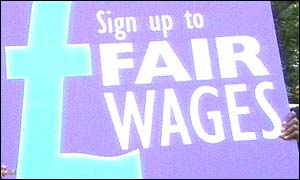 The march is part of the Living Wage campaign Some of east London's poorest workers will be marching on Tuesday against low wages that have forced them to take on two or three jobs. Church and union leaders will join the march from Bow to Mile End calling for a minimum wage of �6.50 an hour. Cleaners, porters and caterers from hospitals - one of the East End's biggest employers - will join other low-paid private workers. It is part of a campaign by The East London Communities Organisation (Telco), which represents 25,000 people from hospitals, churches, mosques, schools and unions.
Telco claims 80% of the city's lowest-paid workers are black and work for London's health trusts. The group is frustrated that while millions of pounds have been spent on regenerating Docklands and Canary Wharf, many east Londoners are stuck in the poverty trap. Currently cleaners at One Canada Square get �4.40 an hour, according to TELCO. Jean Geldart, the secretary of Unison's Tower Hamlets Branch, will be chairing an assembly at the People's Palace in Mile End after the march. Living cost She told BBC London: "Most of these people are doing several jobs. "They are working 60, 70 or 80 hours a week, they mostly don't claim family credit, although they are entitled to it, they don't like to go begging for money to the government." Medirest, one of the companies working within east London hospitals, said trusts would need to pay more for contracts in order to improve workers' pay and conditions. The high cost of living in London has prompted a series of strikes by low-paid workers. In the past few months, university staff, teachers and council workers have voted to strike over London allowances. Strikes by London Underground staff over pay and other issues crippled the Tube network in September and October. | |   See also: 04 Nov 02 | England 01 Nov 02 | Education 01 Oct 02 | England 13 Sep 02 | Business 04 Jul 02 | England 16 Jan 02 | England Top England stories now: Links to more England stories are at the foot of the page. | ||||||||||||||||||||||||||||||||||||||||||||||||||||||||||||||||||||||||||||||||||||||
| |
|  E-mail this story to a friend E-mail this story to a friend |
| |
| Links to more England stories |
| | | ||
 | ||||
 | | Back to top
| ||
| ---------------------------------------------------------------------------------- To BBC Sport>> | To BBC Weather>> | To BBC World Service>> ---------------------------------------------------------------------------------- © MMIII | News Sources | Privacy |





