
|
 |
 | | | | | | ||||||||||||||||||||||||||||||||||||||||||||||||||||||||||||||||||||||||||||||||||||
| | | You are in: UK: England | ||||||||||||||||||||||||||||||||||||||||||||||||||||||||||||||||||||||||||||||||||||||
|
| | Tuesday, 1 October, 2002, 11:58 GMT 12:58 UK Council refuses �1 missile site 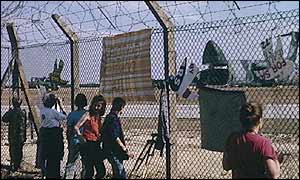 Greenham Common was the site of protests in the 1980s A council has rejected an offer to buy a military site made infamous during the Cold War for �1. The Ministry of Defence (MoD) offered to sell the 31-hectare Greenham Common site near Newbury in Berkshire to West Berkshire Council for the token fee. The compound, which includes shelters that housed nuclear cruise missiles in the 1980s, is protected by law as a public historic monument to the Cold War. The council said the cost of maintaining and refurbishing the site would be too great an expense. 'Regretfully decline' Dr Royce Longton, executive councillor for the environment on the council said they had tried to get a third party interested but had missed a deadline set by the MoD to take up the offer. "The council itself cannot commit to spending the kind of public money that would be needed to maintain and conserve the site, so we have regretfully had to tell the MoD that we are unable to take up their offer." The MoD gave up control of the entire 500-hectare Greenham Common in 1997 and since then the council has lead a campaign to have it restored as a public, green space. Peace protests It was decided by Parliament this year that the site should be protected for future generations. The US-run airbase came to the world's attention because of the anti-nuclear protests by the Women's Peace Camp. The campaign culminated in the "Embrace the Base" protest in 1982 when 30,000 women joined hands around its perimeter fence. Nuclear missiles were finally removed from the base between 1989 and 1991. | |   See also: 05 Sep 00 | UK 05 Sep 00 | UK 03 Sep 00 | UK Internet links: The BBC is not responsible for the content of external internet sites Top England stories now: Links to more England stories are at the foot of the page. | ||||||||||||||||||||||||||||||||||||||||||||||||||||||||||||||||||||||||||||||||||||
| |
|  E-mail this story to a friend E-mail this story to a friend |
| |
| Links to more England stories |
| | | ||
 | ||||
 | | Back to top
| ||
| ---------------------------------------------------------------------------------- To BBC Sport>> | To BBC Weather>> | To BBC World Service>> ---------------------------------------------------------------------------------- © MMIII | News Sources | Privacy |



