|
 |
 | | | | | | |||||||||||||||||||||||||||||||||||||||||||||||||||||||||||||||||||||||||||||||||||||||
| | | You are in: UK: England | |||||||||||||||||||||||||||||||||||||||||||||||||||||||||||||||||||||||||||||||||||||||||
|
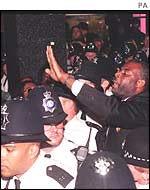
| | Saturday, 14 September, 2002, 05:18 GMT 06:18 UK Lawrence criticism 'changed police' 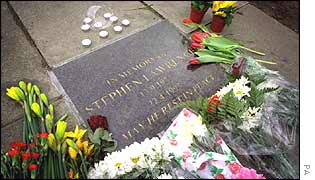 Inquiry's findings of institutional racism were 'helpful' A senior Metropolitan Police officer says the force has been transformed since being labelled as "institutionally racist".
Commander Cressida Dick, head of the racial and violent crimes task force, said the term, applied by the Stephen Lawrence inquiry report, had radically changed the way the force carried out its investigations. She told Radio 4's The World Tonight that she was still committed to bringing Lawrence's killers to justice. She denied the file on the case of the black teenager murdered at a bus stop in Eltham, south-east London in 1993 was "gathering dust".
"It is not a case I can discuss in any detail at all at the moment. "But suffice to say we have been and are determined to find who killed Stephen Lawrence," she said. The file is currently being examined by the Crown Prosecution Service for advice on what further charges could be brought, Ms Dick confirmed. The police handling of the Lawrence case was condemned by the inquiry team as racist and incompetent and real transcripts from the police investigation were even used in a dramatisation of the scandal. But racism is no longer endemic in the police force, Ms Dick insisted, thanks in part to the report's damning conclusions. 'Very helpful' "In my opinion, the concept of institutional racism has actually been very helpful for us. "I don't think we understood it very well until the inquiry report came out, but subsequently it has served as a great trigger and given us the impetus to examine all our processes and to examine the outcomes of those processes and to ask some very hard questions. "It's not just us asking hard questions, it's people in communities, it's our independent advisers, it's our Police Authority and the concept of institutional racism has been very important in transforming the way we do business." Although the Met could not afford to be complacent, she said, it had "come a very long way". 'Rooted out' Asked if there were still racist officers, she said: "I joined the Met in 1983 and racism was rife. "There were very many racist officers and it was an extremely uncomfortable environment for many colleagues to work in. "I think there are very, very few around now. It is extremely likely that if you have racist attitudes you will betray that in your behaviour and if you betray it in your behaviour you can be pretty sure one of your colleagues will report what has happened and you will be rooted out. "Overall in 2002 I would be naive to say there isn't a racist officer, but I think there are very few." | | See also:  11 Sep 02 | England 02 Feb 02 | England 16 Apr 00 | UK 12 Apr 00 | UK 03 Mar 99 | From Our Own Correspondent 24 Mar 99 | UK 16 May 00 | Politics Internet links: The BBC is not responsible for the content of external internet sites Top England stories now: Links to more England stories are at the foot of the page. | |||||||||||||||||||||||||||||||||||||||||||||||||||||||||||||||||||||||||||||||||||||||
| |
|  E-mail this story to a friend E-mail this story to a friend |
| |
| Links to more England stories |
| | | ||
 | ||||
 | | Back to top
| ||
| ---------------------------------------------------------------------------------- To BBC Sport>> | To BBC Weather>> | To BBC World Service>> ---------------------------------------------------------------------------------- © MMIII | News Sources | Privacy |