|
 |
 | | | | | | |||||||||||||||||||||||||||||||||||||||||||||||||||||||||||||||||||||||||||||||||||||||||||||||||||||||||||||||
| | | You are in: UK: Education: Mike Baker | |||||||||||||||||||||||||||||||||||||||||||||||||||||||||||||||||||||||||||||||||||||||||||||||||||||||||||||||||
|
| | Saturday, 9 November, 2002, 01:54 GMT Tale of two universities 
Will he? Won't he? The prime minister's enigmatic, almost teasing, comments on university top-up fees has kept speculation over the government's intentions at fever pitch. Like a swimmer struggling in choppy waters, the Conservative leader, Iain Duncan Smith, clung on to the subject at Prime Minister's Question Time for a second time this week.
Meanwhile the sense of anticipation, excitement and confusion amongst university leaders is palpable. They still don't know what the government will pull out of the hat. But one thing is clear: opinions within Britain's universities are splintering. The ending of the university/polytechnic divide has brought no uniformity of view or interest amongst higher education institutions. This week I had a taste of this diversity as I shuttled between universities seeking views on their hopes and fears for the future. Private university My first stop was an unusual one: Britain's first - and only - private university, the University of Buckingham. It is an attractive place, set in the loop of the river in this ancient Buckinghamshire town. This location was once the border between Saxon England and Danelaw.
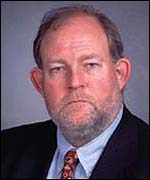
Buckingham University has been around for just over a quarter of a century now. With just under 800 students it is still more on the scale of a large boarding school than a campus university, although its buildings and facilities are impressive. Undergraduate fees are �10,800 a year, a figure that is remarkably similar to the putative top-up fees emanating from Imperial College, London - although much higher than the fee levels envisaged by other elite universities. Foreign students Not surprisingly - while full-time degrees cost no more than �1,100 a year in the state sector - most of Buckingham's students come from abroad. But there are home students too, many of whom are willing to borrow to invest in a degree. A very small number, mostly local students, are given financial help through university bursaries. Buckingham's vice-chancellor - the ebullient and energetic Terence Kealey - is quite bucked up by the debate over top-up fees. He believes it is an important first step towards restoring universities' origins as genuinely, and financially, independent bodies. In a fascinating collection of essays published on Buckingham's 25th anniversary, Kealey describes how Britain's universities were financially independent until World War I. Nationalised universities The devastating effect of inflation on their investments, and the problems of war-time recruitment, left the universities on the brink of bankruptcy. Even Oxford and Cambridge were then forced to go cap in hand to the Treasury. In 1919, the Universities Grants Committee was instituted, with a budget of over �1m.
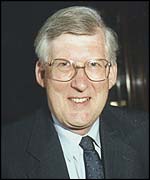
You might be wondering where this history lesson is leading. Well, Kealey's argument is that state funding was the slippery slope which has led to today's position: a nationalised university system, hamstrung by its reliance on increasingly inadequate state funding and lacking the innovation which would have been encouraged by market forces. For example, Buckingham gets its students through degree courses in just two years (when you are paying by the term there is a great incentive to work hard and fast). It achieves this by running a 40 week academic year and argues it packs in just as much in two calendar years as other universities manage in three. Market forces So could Buckingham be the path of the future? Will top-up fees lead to a free market in higher education, with price based on popularity of institution and course? Will they return financial freedom to our elite institutions, allowing them to compete on equal terms with the private, Ivy League American independents, Harvard, Yale and Princeton? Supporters of top up fees believe so. They believe the market, responding to student demand, is the way ahead, albeit they accept the free-market must be tempered by necessary bursary and loan schemes to ensure that no-one is excluded by inability to pay. But others disagree very strongly. After Buckingham I visited Westminster University. New university The contrast is stark: Westminster is urban not rural, has scattered city-centre buildings not a campus and is very large indeed. The University of Westminster began as the Royal Polytechnic Institution in 1838. It became a university a decade ago when the Conservatives abolished the distinction between polytechnics and universities. It has 22,000 students dotted around its many buildings, in and around London's West End. Half of the students are from ethnic minorities and most undergraduates still live with their parents. Westminster, like many other post-1992 universities, sees top-up fees as both dangerous and irrelevant. Dangerous because they think they will be a deterrent to the very people the government is trying to reach in its attempt to broaden university admissions. And irrelevant because probably 70-80% of the full-time undergraduates at the newer universities are exempt, on income grounds, from paying the current tuition fee of �1,100. Top-up fee deterrent For these universities, the fee income derived from charging 20% of students top-up fees would be entirely absorbed in providing bursaries for those who cannot afford to pay. Westminster's vice-chancellor Geoffrey Copland is very concerned that any introduction of top-up fees would deter precisely the students his university, and the government, wants to recruit.
Britain's universities fall very broadly into three groups. There is the so-called Russell Group which represents most of the older, established universities, including Oxford and Cambridge. Then there is the 1994 Group which represents the campus universities which sprang up during the expansionary years of the 1960s - places like Sussex, Essex and the University of East Anglia. Finally, there are the former polytechnics and colleges which attained university status after 1992. Most of these, like Westminster, are members of the Coalition of Modern Universities. Each of these groups has a different take on the future shape of the higher education system. Indeed, even within each of these groups there is a big spread of opinion. Major change ahead The White Paper on Higher Education, now due in January, is likely to accentuate these differences, widening the gap between the research-rich older universities and the newer universities which are funded mainly for teaching. It will be a gap based on income but also on purpose. The government wants some universities to focus almost exclusively on teaching rather than research and others to become "vocational" universities. But there will be great resistance from all but the elite universities (and even from some of them) to changes which create this sort of two-, or three-, tier system. They argue that you weaken teaching by divorcing it from research and you undermine the very notion of a university if you make it just about preparation for work. But change is on the cards. Britain's university system is about to go through its biggest change since World War I. Watch this space. We welcome your comments at educationnews@bbc.co.uk although we cannot always answer individual e-mails. | |
See also:  08 Nov 02 | Education 01 Nov 02 | Mike Baker 31 Oct 02 | Education Internet links: The BBC is not responsible for the content of external internet sites | |||||||||||||||||||||||||||||||||||||||||||||||||||||||||||||||||||||||||||||||||||||||||||||||||||||||||||||||
| |
|  E-mail this story to a friend E-mail this story to a friend |
| | | ||
 | ||||
 | | Back to top
| ||
| ---------------------------------------------------------------------------------- To BBC Sport>> | To BBC Weather>> | To BBC World Service>> ---------------------------------------------------------------------------------- © MMIII | News Sources | Privacy |