|
 |
 | | | | | | ||||||||||||||||||||||||||||||||||||||||||||||||||||||||||||||||||||||||||||||||||||||||||||||||
| | | You are in: UK: Education: Mike Baker | ||||||||||||||||||||||||||||||||||||||||||||||||||||||||||||||||||||||||||||||||||||||||||||||||||
|
| | Friday, 19 July, 2002, 23:24 GMT 00:24 UK Schools in 'snakes and ladders' race
What sort of a secondary school system will England have by the end of the decade? Will it be a pick-and-mix of equal but different schools, each putting their own specialist wrapper around a bare minimum core curriculum?
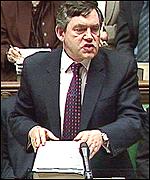
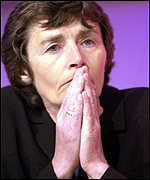
This week, a day after the sugary taste of the chancellor's extra billions for education, schools tasted the medicine that laced the pill. In a 30-page document Education Secretary Estelle Morris revealed her plans to "transform" secondary education. Railway system New Labour has a tendency to want to control the whole train set. Ms Morris wants to be in the signal-box of the school system, pulling levers to switch some schools onto the fast-track to specialist or City Academy status, while shunting the clapped-out ones into the sidings for an overhaul. A new set of rescue engines - Advanced Schools - will come rushing out of the railway sheds to pick up the broken down, out-of-steam comprehensives and tow them back from the branch lines where they have got stuck. The deal between spending ministers and Chancellor Gordon Brown has always been that he will only hand over cash if he gets something in return. In education that means new types of schools, new ways of teaching, better results and greater efficiency. Teachers and pupils you have been warned. Delivering change This means, in turn, that the education secretary has had to sign up to a Faustian pact - in return for money now she has had to sign away her future. She must deliver change agreed now even though the circumstances facing the school system of the future can only be guessed at.
A touch on the helm now and it will be years before a new direction can be achieved. Indeed - at risk of over-extending the metaphor - it is not so much a vessel but a flotilla of 25,000 individual vessels. Trying to direct them all from the centre is a risk. So the plan is set and schools must be made to deliver. That is why strings have been attached to the extra money. The spin doctors may blithely insist these are fine threads, not steel hawsers, but their use remains the same: to steer schools onto the government's policy tracks. Hierarchy of schools So while there is talk of encouraging diversity, and allowing headteachers to set their own priorities, it is all within a clearly-defined overall pattern. And that pattern is for a clear hierarchy of schools providing what ministers call a "clear ladder of improvement". By their metaphors shall they be known. The "ladder" image is a give-away. Social scientists have long distinguished between systems of equality which offer either a narrow, but steep ladder of opportunity for a few or, by contrast, a broad, but gently sloping pathway for the many. Clearly the government wishes to replace the current broad pathway of "one-size-fits-all" comprehensives by a ladder of different types of school. But a ladder metaphor implies only a few at a time can ascend. Some will always be left on the bottom rung. Climbing higher On the next step up are the "improving schools" and those with proven good leadership eligible for the extra payments of �125,000. The higher you climb, the bigger the prizes you collect. These schools can then aspire to the rungs above, marked specialist school, beacon school and City Academy.
They will be a model to the others and their head teachers may even take over less successful neighbouring schools and run them as a chief executive presiding over a federation of four or five local schools. The question is is there room on the ladder for everyone to move up the rungs at the same pace, with no-one being left behind? The government hopes to achieve this by requiring those nearer the top to use their privileged position to reach back and help haul up the others. So Advanced Schools will spread their formula for success to their neighbours and Specialist Colleges and City Academies will be expected to share their superior facilities and expertise. Stevenage model It might work. Take, for example, the local plans for schools in Stevenage. There are seven secondary schools in this Hertfordshire town. At present they lose many bright pupils to selective schools in neighbouring authorities. Until recently all the Stevenage schools were "standard" comprehensives. One of those at the bottom of the local ladder of opportunity, Marriotts School, has just become a specialist sports college. The long-term plan is for each of the seven schools to have its own specialism. The geography of the town means pupils could, feasibly, travel to any of the seven specialist schools. There could be genuine choice. Each school within this federation would share its specialist teachers with the others. Everyone would gain. Rural drawback That is the theory. In Stevenage, it might well work. But the whole country is not like Stevenage. How does De Aston school, in rural Lincolnshire, benefit from a federation of specialist schools when its nearest neighbour is some 15 miles away? The financial advantages of becoming a specialist school mean De Aston is thinking about going that way. But since pupils in the vast area it serves have no real alternative, how can it justify specialising in one area of the curriculum? I know that ministers believe the real key to the success of specialist schools is not actually that they specialise (after all they must continue to teach the entire national curriculum) but rather that schools are energised by the very process of bidding and preparing for specialist status. More choice If that is so - and there is truth in it - why are schools not allowed more freedom to become the sort of specialist school they think suits their community best? De Aston, for example, would like to become a "Specialist Community School". But that is not on the list. Nor for that matter is it possible to become a school specialising in history, geography or English literature. This government is terrified of complacency. Perhaps this is the legacy of Labour's long years in the wilderness. They want change fast. The determination to improve all levels of education is welcome. So too is Ms Morris's honesty on saying publicly what every one knows to be true but rarely admits - namely, that some schools are better than others and some are simply not good enough. Dangers But there are two great dangers in the government's new vision for secondary schools. Firstly, it is very reliant on central planning and the belief that Whitehall knows best. As Whitehall tends to have a London-centric perspective, this may not prove to be right for the rest of the country. Secondly, there is a real danger of setting in stone a new hierarchy of schools. We could then have a game of snakes and ladders. Good schools will get higher status and more money as they climb the ladder. Others will find themselves spiralling down the snake as pupils flee to more prestigious schools higher up the hierarchy. The government is pinning its hopes on the successful, well-led schools reaching out to "yank up" the others. Let's hope that works. If it does not, we will be left with a sector of schools stuck on the bottom rung which no-one will want to touch with the proverbial "barge-pole". We welcome your comments at educationnews@bbc.co.uk although we cannot always answer individual e-mails. | | See also:  15 Jul 02 | UK Education 16 Jul 02 | UK Education 16 Jul 02 | UK Education 16 Jul 02 | UK Education Internet links: The BBC is not responsible for the content of external internet sites | ||||||||||||||||||||||||||||||||||||||||||||||||||||||||||||||||||||||||||||||||||||||||||||||||
| |
|  E-mail this story to a friend E-mail this story to a friend |
| | | ||
 | ||||
 | | Back to top
| ||
| ---------------------------------------------------------------------------------- To BBC Sport>> | To BBC Weather>> | To BBC World Service>> ---------------------------------------------------------------------------------- © MMIII | News Sources | Privacy |