
|
 |
 | | | | | | ||||||||||||||||||||||||||||||||||||||||||||||||||||||||||||||||||||||||||||||||||||||
| | | You are in: UK: Education | ||||||||||||||||||||||||||||||||||||||||||||||||||||||||||||||||||||||||||||||||||||||||
|
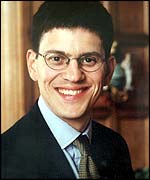
| | Tuesday, 28 January, 2003, 11:21 GMT Failing teachers to 'leave with dignity'  Teachers should be able to leave with "dignity", says minister Teachers who are struggling in their jobs should be able to "leave with dignity", says the School Standards Minister David Miliband. And he said that schools would be given draft guidance on tackling "underperformance" by Easter. Speaking in Bournemouth at a conference on performance management, Mr Miliband indicated that there needed to be a better and more "sensitive" way for unsuccessful teachers and heads to be removed.
"It is neither in pupils' interests nor in the longer term interests of the member of staff that they struggle on for long stretches of time, failing to meet their responsibilities." "Our aim must be to ensure that underperformance is tackled sensitively but rigorously, and that heads or other staff who cannot meet the required standards leave their posts with dignity." Year's lost learning Mr Miliband's speech highlighted that one of the biggest factors in the different levels of pupil achievement was the difference in the quality of teaching within schools. "The different approaches of individual teachers account for some 30% of this variation - roughly equivalent to an additional year's education for those students with the best teachers compared to the worst. "It is the difference between boredom and disenchantment and engagement and achievement." But removing staff who are not up to the job is a difficult issue for head teachers and governors, accepted the minister. And he said that there had been a demand for "plainer guidance" on how employment law applied in schools. "I therefore accept the responsibility to produce new draft guidance by Easter for wide consultation," said Mr Miliband. "Our aim must be to ensure that underperformance is tackled sensitively but rigorously, and that heads or other staff who cannot meet the required standards leave their posts with dignity." But a teachers' union rejected criticism that heads were not applying tough enough criteria for performance pay. "There is a simple reason for that. Sensible headteachers know that introducing differential pay based upon performance is a recipe for disaster in their schools - bringing acrimony and anger in its wake," said Eamonn O'Kane, general secretary of the National Association of Schoolmasters Union of Women Teachers. | | See also:  15 Jan 03 | Education 05 Feb 02 | Education 07 Nov 02 | Education Internet links: The BBC is not responsible for the content of external internet sites Top Education stories now: Links to more Education stories are at the foot of the page. | ||||||||||||||||||||||||||||||||||||||||||||||||||||||||||||||||||||||||||||||||||||||
 | |
|  E-mail this story to a friend E-mail this story to a friend |
| |
| Links to more Education stories |
| | | ||
 | ||||
 | | Back to top
| ||
| ---------------------------------------------------------------------------------- To BBC Sport>> | To BBC Weather>> | To BBC World Service>> ---------------------------------------------------------------------------------- © MMIII | News Sources | Privacy |




 Our aim must be to ensure that underperformance is tackled sensitively but rigorously, and that heads or other staff who cannot meet the required standards leave their posts with dignity