|
 |
 | | | | | | |||||||||||||||||||||||||||||||||||||||||||||||||||||||||||||||||||||||||||||||||||||||
| | | You are in: UK: Education | |||||||||||||||||||||||||||||||||||||||||||||||||||||||||||||||||||||||||||||||||||||||||
|
| | Monday, 9 December, 2002, 15:56 GMT Councils get more say on school cash 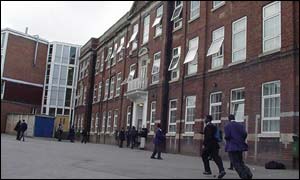 Money for secondary schools will be tied to reform The Education Secretary Charles Clarke has said local authorities in England will be given more control over school budgets. Announcing how he is going to spend the extra �12.8bn ear-marked in the summer for schools for the next three years, Mr Clarke said the changes would allow councils to tailor important programmes to meet local needs. In a statement to the Commons, Charles Clarke said that by 2005/6, 92% of funding for schools would be devolved to local level compared with 87% now. Local councils will be allowed to take over the running of a number of centrally-run schemes.
Mr Clarke's statement was designed to give details of how the already-announced 17% increase in schools spending over the next three years was to be carved up. He told MPs he wanted to see a simpler, fairer system and a "continuing drive to raise standards in schools". Childcare He also announced funding to provide 250,000 new childcare places next year, which he said would provide a nursery place for all three-year-olds. He highlighted the extra �1.2bn already announced for the further education sector over the next three years. It had been thought that Mr Clarke would make an announcement about the greater use of classroom assistants, who are not qualified teachers. But this did not happen. Mr Clarke said progress was being made in securing union support for a more flexible education workforce but money to fund the changes could not be released until the agreement was completed. Mr Clarke said the 17% increase in spending on schools would represent an increase in funding per pupil of �1,000 in the ten years to 2006.
He told MPs: "At a time when we face economic uncertainty it is more important than ever that we continue to invest and reform to drive up the skills of our people and improve our productivity as a nation. "Tackling the attainment gap and creating a world-class system of education and training will only be achieved if in addition to investing, we also reform our schools and colleges so that they genuinely meet the aspirations of every child." "The shadow education secretary Damian Green told MPs most of Mr Clarke's statement was "re-announcements" of previous spending decisions. "It's clear you want to appear in a seasonally appropriate role as an early Father Christmas for schools," he told Mr Clarke. "Sadly the wrapping is more enticing than the contents of the package." On the devolution of spending powers to councils, Mr Green said central spending would still remain as a higher proportion of schools funding than in 1997. "Badly wrong" For the Liberal Democrats, education spokesman Phil Willis welcomed the extra funding and the government's move towards decentralisation. He said the concession proved previous education secretaries had got it "badly wrong in trying to dictate from the centre everything that is spent". In his spending review in the summer, the Chancellor Gordon Brown announced that spending on education in England would go up by 6% over the next three years, from �45bn in 2002-3 to �57.8bn in 2005-6. The total included the �12.8bn ear-marked for schools. Plans for university funding will be announced in January. | | See also:  16 Jul 02 | Education 16 Jul 02 | Education 16 Jul 02 | Education 15 Jul 02 | Education 15 Jul 02 | Education 15 Jul 02 | Politics Top Education stories now: Links to more Education stories are at the foot of the page. | |||||||||||||||||||||||||||||||||||||||||||||||||||||||||||||||||||||||||||||||||||||||
| |
|  E-mail this story to a friend E-mail this story to a friend |
| |
| Links to more Education stories |
| | | ||
 | ||||
 | | Back to top
| ||
| ---------------------------------------------------------------------------------- To BBC Sport>> | To BBC Weather>> | To BBC World Service>> ---------------------------------------------------------------------------------- © MMIII | News Sources | Privacy |