|
 |
 | | | | | | |||||||||||||||||||||||||||||||||||||||||||||||||||||||||||||||||||||||||||||||||||||||||||||||||||||||||||||||||||||||||||||||||
| | | You are in: UK: Education | |||||||||||||||||||||||||||||||||||||||||||||||||||||||||||||||||||||||||||||||||||||||||||||||||||||||||||||||||||||||||||||||||||
|
| | Friday, 29 November, 2002, 10:13 GMT 'Special needs' pupils turned away 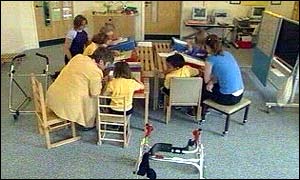 Head teachers say resourcing is the issue The public spending watchdog says schools are turning away children with special educational needs for fear they will harm their league table standings.
The claim, in an Audit Commission report, is disputed by head teachers - who say the problem is lack of resources to cope with children's special needs. The commission said provision for the one fifth of pupils with special needs was too patchy and was all too often regarded as an "add-on" by schools and local education authorities in England and Wales. The commission's controller, Sir Andrew Foster, said: "League tables weaken schools' commitment to working with pupils with SEN - for fear they will drag down their position. "This has a damaging effect on staff morale and explains the reluctance of some head teachers to admit pupils with SEN." Scale of the problem Overall there were more than 1.5 million children defined as having special educational needs (SEN) in mainstream primary and secondary schools.
That represented almost one in five of all pupils. A majority are boys, new official figures have revealed for the first time. The Audit Commission report laments the lack of information in England on the type of need - although the Department for Education is working on a way to cover this in the annual schools census from 2004. In Wales and in Scotland the pattern of children who have statements of need is much the same. This is that girls and boys are more or less equally likely to have physical disabilities, but boys are far more likely than girls to have specific learning difficulties, autistic disorders or emotional or behavioural problems. The Audit Commission says early intervention can make a great difference, but funding for this is "incoherent and piecemeal". League table concerns The commission points to a gap in the evidence in relation to special needs and ethnicity, and calls for more data to be made available. It argues that whatever the causes, helping children with SEN to reach their potential should be a priority for all schools. It says national tests and league tables focus on the top 70-80% of pupils, so inclusive schools can appear to perform badly.
"This needs to change. If we are to achieve real and sustainable improvements, SEN must be made a priority for all." Nine-year-old Jake went to the local primary school where the staff did their best but things did not work out. "By the time it got to his third year when they start to sit their SATs, all the other kids were in the class doing their exams and Jake was made to sit in the corridor - which isn't inclusion, that's exclusion," said his father, David Levine. Resources David Hart, general secretary of the National Association of Head Teachers, said: "The reason why some schools are basically reluctant to take pupils with special educational needs is not because of league tables, but because they simply don't believe they have the resources to cope with the demands thrown up by such pupils." Gwen Evans of the Association of Teachers and Lecturers said the report "highlights all too clearly what happens when successive governments try to achieve inclusion on the cheap". Philippa Russell of the Disability Rights Commission said: "It is patently wrong that provision varies enormously from school to school and from region to region. "We agree with the Audit Commission that an education system which is driven by league tables does not encourage schools to welcome disabled children. Schools need to be awarded for their inclusive approach not penalised." Changes A Department for Education and Skills spokesman said "value added" league tables were being brought in to "better show the progress children have made". An experimental version involving 495 primary schools in England is being included in this year's primary school league tables, to be published next week. The spokesman added: "Ofsted inspections now evaluate educational inclusion and require schools to demonstrate how they are meeting the needs of all their pupils - this will also be a lever for change. "We are considering further ways of recognising the wider achievements of schools in catering for a diverse range of pupils, including pupils with SEN." | |
See also:  29 Nov 02 | Education 21 Oct 02 | Education 08 Jul 02 | Education 31 Mar 02 | Education 04 May 01 | Education 13 Sep 02 | Education Internet links: The BBC is not responsible for the content of external internet sites Top Education stories now: Links to more Education stories are at the foot of the page. | |||||||||||||||||||||||||||||||||||||||||||||||||||||||||||||||||||||||||||||||||||||||||||||||||||||||||||||||||||||||||||||||||
| |
|  E-mail this story to a friend E-mail this story to a friend |
| |
| Links to more Education stories |
| | | ||
 | ||||
 | | Back to top
| ||
| ---------------------------------------------------------------------------------- To BBC Sport>> | To BBC Weather>> | To BBC World Service>> ---------------------------------------------------------------------------------- © MMIII | News Sources | Privacy |