
|
 |
 | | | | | | ||||||||||||||||||||||||||||||||||||||||||||||||||||||||||||||||||||||||||||||||||||
| | | You are in: UK: Education | ||||||||||||||||||||||||||||||||||||||||||||||||||||||||||||||||||||||||||||||||||||||
|
| | Monday, 28 October, 2002, 11:40 GMT Value of classroom computers questioned 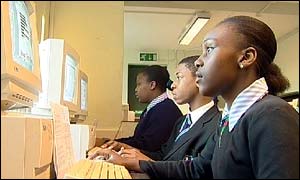 The UK is also spending massively on school computers Use of computers for teaching does not improve pupils' achievements and may even be harmful, according to a study. Researchers looked at the impact of computer-aided teaching in Israel, which has had a major, lottery-funded programme of school computerisation since 1994. They said the ongoing annual costs were equivalent to employing another teacher in each school. And they said the money would have been better spent on other things. No effect Professor Joshua Angrist of the Massachusetts Institute of Technology and Professor Victor Lavy of the Hebrew University of Jerusalem report their findings in the October issue of the Economic Journal. The best estimates showed that the mathematics scores of pupils in elementary schools that had received new computers went down. In eighth year maths and in language classes, there was no apparent effect either way. "The results do not support the view that computer-aided instruction improves learning, at least as measured by pupil test scores," they said. "We find a consistently negative relationship between the use of computers and Year Four maths scores." Disruptive The most probable reason for the poor test results was that "computer-aided instruction is not better and may even be less effective than other teaching methods". "This significant and ongoing expenditure on education technology does not appear to be justified by pupil performance results. "Money spent on computers would have been better spent on other things." They said a possible explanation for their findings was that the transition to computer-aided instruction was disruptive, while any benefits from it took time to appear. 'Not in the UK' The schools in their sample had been using computers for an average of one full school year, which they said might not be long enough to have had an impact - although it certainly had in Year 4 maths. Prof Lavy said the focus had been on the use of computer software for instruction in the classroom - not, for example, internet use. Neil McLean of the UK government's computer agency, Becta, said the findings in the UK were generally in the other direction, with pupils test scores improving by 0.5%. The emphasis had been on training teachers to use computers as tools to help them in their teaching. | | See also:  10 Apr 02 | Education 09 Jan 02 | Education 08 May 01 | Education Internet links: The BBC is not responsible for the content of external internet sites Top Education stories now: Links to more Education stories are at the foot of the page. | ||||||||||||||||||||||||||||||||||||||||||||||||||||||||||||||||||||||||||||||||||||
| |
|  E-mail this story to a friend E-mail this story to a friend |
| |
| Links to more Education stories |
| | | ||
 | ||||
 | | Back to top
| ||
| ---------------------------------------------------------------------------------- To BBC Sport>> | To BBC Weather>> | To BBC World Service>> ---------------------------------------------------------------------------------- © MMIII | News Sources | Privacy |



