|
 |
 | | | | | | |||||||||||||||||||||||||||||||||||||||||||||||||||||||||||||||||||||||||||||||||||||||
| | | You are in: UK: Education | |||||||||||||||||||||||||||||||||||||||||||||||||||||||||||||||||||||||||||||||||||||||||
|
| | Thursday, 18 July, 2002, 14:09 GMT 15:09 UK Schools 'unprepared for citizenship' 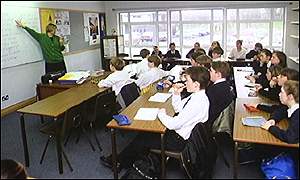 The lessons are compulsory for 11 to 16 year olds Many secondary schools in England are ill prepared for the introduction of citizenship classes in September, inspectors have warned. The citizenship curriculum becomes compulsory next term for pupils aged between 11 and 16.
Now the Office for Standards in Education (Ofsted) warns one in ten schools has given the subject a low priority and only half of the schools inspected had properly prepared for the introduction of citizenship classes over the past two years. "One in ten schools had given the issue a low priority and progress was unsatisfactory," the Ofsted report said. "A small number of schools made the assumption that they were already providing much of the statutory programme. "Some had assumed that citizenship is simply a part of personal, social and health education (PSHE)." Work to be done Chief inspector David Bell said: "This report demonstrates the importance of setting clear objectives and developing strong models for the teaching of citizenship as a new subject, including training provision and evaluation." "It shows that some work is still to be done for this new subject to be implemented successfully." The Department for Education remained upbeat about the introduction of citizenship classes in schools. "The Ofsted report surveyed only 20 schools in February, but found that most were making good progress with their citizenship plans," a spokesman said. "We are confident that all secondary schools will be fully prepared when citizenship becomes a compulsory part of the curriculum from this September. "The Qualifications and Curriculum Authority will shortly be issuing guidance on the assessment for citizenship to help schools meet the assessment requirements." Demands on schools John Dunford, general secretary of the Secondary Heads Association, said schools had many demands of their time.
"If some schools have given a low priority to the introduction of citizenship, this is not surprising as they may well have more urgent priorities in their school development plan." Deputy general secretary of NASUWT Chris Keates said: "I am sure the overworked teachers in over-stretched schools wrestling with an overloaded curriculum will find it comforting that these problems do not appear to deter Ofsted from issuing advice on how to implement a new subject successfully in an ideal world." | | See also:  07 Jun 02 | Scotland 14 Feb 01 | Education 13 Dec 00 | Education 09 Mar 99 | Education Top Education stories now: Links to more Education stories are at the foot of the page. | |||||||||||||||||||||||||||||||||||||||||||||||||||||||||||||||||||||||||||||||||||||||
| |
|  E-mail this story to a friend E-mail this story to a friend |
| |
| Links to more Education stories |
| | | ||
 | ||||
 | | Back to top
| ||
| ---------------------------------------------------------------------------------- To BBC Sport>> | To BBC Weather>> | To BBC World Service>> ---------------------------------------------------------------------------------- © MMIII | News Sources | Privacy |