Parents are urged to check weather and tide times 
|
Parents may be putting their children's lives at risk because they are unaware of coastal dangers, according to a survey. A poll for the government's Maritime and Coastguard Agency found that almost three-quarters of adults questioned did not know tides and currents could be dangerous.
More than 75% admitted they would not check tide times before going to the beach and 46% were not even aware that the coastguard is responsible for saving lives on cliffs and shorelines.
Just under a quarter of the 549 adults interviewed for the research said they would attempt to save someone in difficulty, putting both lives at risk, rather than dialling 999 for the Coastguard.
Every year, more than 25 million holidays and 110 million day trips are taken at the British seaside. Coastguards assist about 12,000 people on the UK's 10,500 miles of coastline - such as children being swept out to sea on inflatables or cut off by the tides - saving an average of a dozen lives a day. In 2002, 321 lost their lives around the UK's shores.
Almost three out of every four children admit they know very little about seaside dangers, MCA research indicates.
To improve people's knowledge of coastal dangers and cut the number of accidents, the agency is organising a Sea Smart campaign.
Sea Smart
As part of the drive, parents are being encouraged to check the weather and tides before leaving home and be especially vigilant when allowing children to use inflatables on the beach.
A 'Smart Beach Band' has also been launched to prevent children getting lost.
 | The Sea Smart code If you see anyone in trouble, dial 999 and ask for a Coastguard Check the weather and tides before you leave Keep children within reach at all times Always tie inflatables to an adult on the shoreline Keep clear of cliff edges - they can be slippery when wet Don't drink and drown - eating and drinking before swimming may give you cramps |
The waterproof wristband can contain the parents mobile phone numbers plus safety information. The beach bands are hypoallergenic and can retain information under water for more than 12 hours.
The bands will also carry the MCA's Sea Smart code asking visitors to the coastline to dial 999 for the coastguard if they see someone in trouble.
The bands can be obtained from local tourist information centres and lifeguard stations.
The MCA's Sea Smart campaign aims to reduce the many preventable accidents and deaths.
Chief coastguard, John Astbury, said: "Now that summer is here, we ask the any people who are heading for our coastline to be aware of the dangers shorelines and cliffs can present and, should difficulties arise, who to contact for help."


 One-Minute World News
  News services

 E-mail this to a friend
  Printable version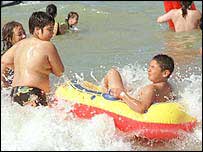
 More details
 We ask the any people who are heading for our coastline to be aware of the dangers shorelines and cliffs can present

