|
 |
 | | | | | | |||||||||||||||||||||||||||||||||||||||||||||||||||||||||||||||||||||||||||||||||||||||||||||||||||||
| | | You are in: UK | |||||||||||||||||||||||||||||||||||||||||||||||||||||||||||||||||||||||||||||||||||||||||||||||||||||||
|
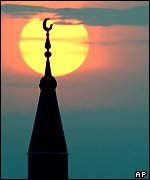
| | Friday, 7 February, 2003, 00:36 GMT Muslims fear Iraq conflict consequences  Finsbury park mosque: Recently under investigation
They feel it is symptomatic of the way the British government fails to defend their place in society. Professor Muhammad Anwar of Warwick University said war could so destabilise the position of British Muslims in society it would take decades for the damage to be repaired.
Professor Anwar said he had found an increasing insecurity among Muslims as the likelihood of war increased. "They generally feel that their difference of opinion [against war] is leading them to being labelled as disloyal to the country," said Prof Anwar. "War is going to create a lot of problems and the danger is that there will be such damage it will take us decades to recover."
"If they react to unequal treatment then that is going to lead to some sort of dissatisfaction or alienation," he said. "That could lead to something else." Qadir Bakhsh, co-author of the report, said the government was failing to persuade Muslims that war would be anything other than a war against Islam. "The message people are getting from President Bush and Tony Blair is this is some kind of crusade," he said. "It is something they feel is being projected by the governments and the media." Fears of attacks Dr Richard Stone, chair of the Runnymede Trust's commission into Islamophobia, the first British study into discrimination against Muslims, backed the report, saying he had real fears for the coming months.
Dr Stone said Muslims were increasingly being misrepresented in the media and being told to integrate. "But where are the programmes for us (non-Muslims) to change our attitudes towards them?" said Dr Stone. "It is the inadequacy of state policies to understand why people don't choose to integrate that is the real problem." State policies The report from the university's Centre for Research in Ethnic Relations conducted in-depth interviews with almost 90 people as part of an on-going European Union project. It called for legislation to outlaw religious discrimination against Muslims because current race relations law does not provide this protection. This gap in the law, says the report, has knock-on effects throughout society, including significant prejudice in the workplace. Interviewees believed they were being failed by the criminal justice system but recognised the police were becoming more responsive. Two of the areas most praised were the NHS and local councils. | | See also:  11 Dec 02 | UK 23 Dec 02 | UK 23 Dec 02 | UK Internet links: The BBC is not responsible for the content of external internet sites Top UK stories now: Links to more UK stories are at the foot of the page. | |||||||||||||||||||||||||||||||||||||||||||||||||||||||||||||||||||||||||||||||||||||||||||||||||||||
 | |
|  E-mail this story to a friend E-mail this story to a friend |
| |
| Links to more UK stories |
| | | ||
 | ||||
 | | Back to top
| ||
| ---------------------------------------------------------------------------------- To BBC Sport>> | To BBC Weather>> | To BBC World Service>> ---------------------------------------------------------------------------------- © MMIII | News Sources | Privacy |






 If they react to unequal treatment then that is going to lead to some sort of dissatisfaction or alienation - that could lead to something else