
|
 |
 | | | | | | ||||||||||||||||||||||||||||||||||||||||||||||||||||||||||||||||||||||||||||||||||||||||||||||||||
| | | You are in: UK | ||||||||||||||||||||||||||||||||||||||||||||||||||||||||||||||||||||||||||||||||||||||||||||||||||||
|
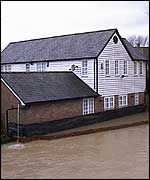
| | Friday, 3 January, 2003, 02:55 GMT Kitemarks on horizon for flood protectors  The device kept this house dry for 30 hours
As householders in many parts of the UK struggle to stem rising floodwater, several inventors have come forward with devices claiming to keep homes and businesses bone dry. But few people are willing to fork out money for these gadgets unless they can be sure they work. Insurers are also reluctant to offer discounts on premiums to those who fit these devices. But that could be about to change.
The BSI and the Environment Agency have been working closely together. The makers of one such device, the Floodskirt, say it has come through its first real test with flying colours. The device combines a rubber "skirt" to keep out flash floods with sealants and pumps to keep out ground water. It was fitted to a home in Yalding, Kent in October 2001 and in the last few days the area has been inundated by the overflowing river Medway. Co-inventor Glynn Woodward said: "The water around the house was up to three feet six inches for 30 hours but the Floodskirt held it back and kept the owners dry." The owner of the house, Duncan Hewitt, and his partner Janice Turner, agreed to let the prototype Floodskirt be fitted to their home in October 2001. The device would have cost them about �35,000.
Malcolm Tarling, from the Association of British Insurers, said: "There is no national accreditation scheme for these sort of devices. "We are talking to Defra and the Environment Agency to establish the feasibility of the testing criteria." He said if such devices were found to "do what they say on the tin" insurers might well consider offering discounts on premiums to those who fit them. Mr Tarling said there were similarities with immobilisers which, once proved to reduce car crime, were accepted by insurers who offered discounts to motorists who fitted them. 'Habitually' flooded He said the average claim for a household flooding was between �15,000 and �30,000 and he said insurers would inevitably raise premiums for those whose homes were in areas which "habitually" flooded. But Mr Tarling said: "If insurers can see that policy holders have taken steps to reduce the risk of flooding, or at least the risk of damage occurring, they might look at lowering premiums." A BSI spokesman said: "We have laboratories where we test everything from condoms to motorcycle helmets but at the moment we can't test these flood protection devices.
He said there were inevitably problems with testing such devices as it was very difficult to simulate flooding and rising water tables. Mr Woodward, a chartered surveyor, and his business partner Terry Blake, a builder, are seeking venture capital in an attempt to reduce their production costs and therefore make the Floodskirt cheaper to install. But Mr Woodward said he would consider selling the patent to a manufacturing company if he felt that was the only way forward. | |
See also:  02 Jan 03 | UK 26 Oct 01 | England Internet links: The BBC is not responsible for the content of external internet sites Top UK stories now: Links to more UK stories are at the foot of the page. | ||||||||||||||||||||||||||||||||||||||||||||||||||||||||||||||||||||||||||||||||||||||||||||||||||
 | |
|  E-mail this story to a friend E-mail this story to a friend |
| |
| Links to more UK stories |
| | | ||
 | ||||
 | | Back to top
| ||
| ---------------------------------------------------------------------------------- To BBC Sport>> | To BBC Weather>> | To BBC World Service>> ---------------------------------------------------------------------------------- © MMIII | News Sources | Privacy |






 We are working on ways of testing these flood protection devices and a new facility should be coming on line during this year.

 TALKING POINT
 UK floods