
|
 |
 | | | | | | |||||||||||||||||||||||||||||||||||||||||||||||||||||||||||||||||||||||||||||||||||||||||||||||||||||||||||||||||||||||||
| | | You are in: UK | |||||||||||||||||||||||||||||||||||||||||||||||||||||||||||||||||||||||||||||||||||||||||||||||||||||||||||||||||||||||||||
|
| | Thursday, 12 December, 2002, 00:35 GMT How poor is poor in modern Britain?  Child poverty: Highest in London
 Three years on, there are some 500,000 fewer children in poverty as officially defined by the government. There's still more than three million out there. But for most people, the problem with the debate is that numbers alone provide little understanding of how poverty manifests itself. What does it mean to be a household living on 60% of median earnings after housing costs, the government's own preferred poverty threshold? How poor is poor in modern Britain? The children we see today do not look as visibly impoverished as the street urchins of the 19th century. But does it mean they are any better off? "Our idea of poverty is dated," says Martin Barnes of the Child Poverty Action Group. "What our parents or grandparents saw as poverty is simply not the same issue that we have today.
What we do have, says Mr Barnes, are parents who keep their children at home rather than sending them to school until they have begged or borrowed - usually at high rates - the money for new shoes. The child begins to miss out on education and the cycle of low achievement, expectations and esteem threatens to continue. Then there's the estimated 300,000 children who don't get the free school meals they are entitled to because either they are afraid of being bullied or their parents are too embarrassed to claim them. And in some cases that might be the only hot meal they would get in a day.
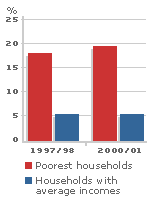
Poverty manifests itself in different ways and the latest report Joseph Rowntree Foundation report tries to draw out all these factors. Take central heating for instance. There has been a dramatic rise in the number of homes with central heating. In 1994/5, a quarter of poor families did not have central heating. Today that's been cut to just 15%.
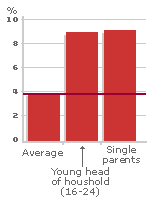
"This is something that has not been in the direct control of government. It's something that's happened because of the actions of others such as housing associations." There have also been huge cuts in burglaries which have dropped to their lowest level since the mid 1980s. Both of these are important issues in tackling poverty as they go to the core of quality of life. But looking at the bald statistics from another direction can tell you a different story. Single parents are almost four times more likely to be burgled than the average household. Single parents are also the most likely not to have any insurance - and therefore the least likely to be able to replace stolen belongings.
So if they get burgled, they will find it virtually impossible to get short-term loans to replace belongings without slipping into chaotic and expensive debt. "If you are struggling on a low income then it becomes a simple issue of having enough cash around just to meet day to day needs so the bank account issue is very important," says Martin Barnes. "There is a problem of banks not being keen to give bank accounts to people on low incomes or intermittent earnings. "The High Street banks all offer basic accounts now they are not publicising these and there's no evidence they are trying to improve take-up." Imaginative policies These are complicated problems. When Labour took power in 1997, it promised radical and innovative thinking. Some of its earliest ideas to tackle poverty have appeared quite radical, such as Sure Start for single parents or after-school homework centres on run-down estates. But are the schemes imaginative enough? "It's perhaps too early to think about [any conclusions] on things like Sure Start," says Guy Palmer. "They need to take all of these and make them mainstream across the whole country. The trends are favourable but there are some real intractable problems." Martin Barnes agrees: "There's no question that there is a lot of policy thinking going on and we must not forget that the child poverty pledge is only three years old. "But sometimes the policies look like an impressionist painting - some of the brush strokes are too broad to always understand." | | See also:  12 Dec 02 | Business 19 Nov 02 | England 10 Dec 01 | UK Internet links: The BBC is not responsible for the content of external internet sites Top UK stories now: Links to more UK stories are at the foot of the page. | |||||||||||||||||||||||||||||||||||||||||||||||||||||||||||||||||||||||||||||||||||||||||||||||||||||||||||||||||||||||||
|  |
|  E-mail this story to a friend E-mail this story to a friend |
 | |
| Links to more UK stories |
| | | ||
 | ||||
 | | Back to top
| ||
| ---------------------------------------------------------------------------------- To BBC Sport>> | To BBC Weather>> | To BBC World Service>> ---------------------------------------------------------------------------------- © MMIII | News Sources | Privacy |








 There is a problem of banks not being keen to give bank accounts to people on low incomes or intermittent earnings