
|
 |
 | | | | | | |||||||||||||||||||||||||||||||||||||||||||||||||||||||||||||||||||||||||||||||||||||||||||||||||||||||||||||||||||||||||||||||||
| | | You are in: UK | |||||||||||||||||||||||||||||||||||||||||||||||||||||||||||||||||||||||||||||||||||||||||||||||||||||||||||||||||||||||||||||||||||
|
| | Wednesday, 4 December, 2002, 11:19 GMT Part of Concorde tail 'fell off' 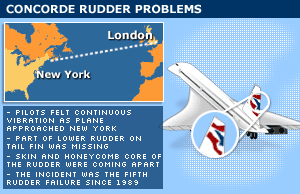
British Airways has launched an urgent investigation after part of a Concorde tail rudder fell off during a flight from London to New York, the BBC has learned. It is the fifth rudder failure on a BA Concorde since 1989, despite changes to inspection procedures aimed at preventing such incidents.
The Concorde pilots said they felt a continuous vibration as the aircraft decelerated from supersonic speed on its approach into New York last Wednesday. After a normal landing they found that part of the lower rudder on the tail fin was missing. None of the 96 passengers or nine crew on board were injured in the incident. Inspections David Learmount, of Flight International magazine, said BA could "cope with problems of this kind and the aircraft is completely controllable during such incidents". However, air accident investigators are concerned that the incident is "very similar" to a previous one in 1998. A report from the Air Accidents Investigation Branch (AAIB) said that improved, non-destructive and visual inspections should have detected that the metal skin and honeycomb core of the rudder were coming apart. But the AAIB stressed that Concorde remains safe to fly, even if an aircraft loses one of the four wedges which make up the vertical tail rudder. The Civil Aviation Authority, which regulates safety, says it has a continuing programme of monitoring Concorde rudders. A spokesman said: "We are happy there is no safety risk, and happy for Concorde operations to continue". 'Not needed' Pilots have found that partial loss of the rudder does not significantly affect aircraft handling.
He said the affected panel "only comes into use for steering during take-off and if there is an engine failure or if there is a cross-wind, so for most flights it is not needed at all". David Learmount said that a way of strengthening the rudders will be made a priority. But he added: "Operationally, the loss had no effect on the plane. "I understand the pilots felt a little 'pop' as they accelerated, but thought little of it as there was no apparent fault." Visual inspections The airline's fleet of seven Concordes was re-equipped with new rudders 10 years ago, following a series of problems. But a further incident occurred in 1998, when part of a lower rudder detached, again on a London to New York flight. In November it was revealed that two BA Concordes had developed other problems during transatlantic flights. An engine failure forced one New York-bound plane to turn back to London and another flight was forced to cut its speed when cracks appeared in a window. In another incident, engine failure forced an Air France Concorde to descend thousands of metres, reportedly causing panic on board. November also marked the first anniversary of the return of Concorde passenger services, following the deaths of 113 people when one of the Air France planes crashed near Paris in July 2000. | |
See also:  04 Dec 02 | UK 06 Nov 02 | UK 06 Nov 02 | Europe 15 Jul 02 | UK 15 Mar 02 | UK 18 Nov 01 | UK 17 Jul 01 | UK Internet links: The BBC is not responsible for the content of external internet sites Top UK stories now: Links to more UK stories are at the foot of the page. | |||||||||||||||||||||||||||||||||||||||||||||||||||||||||||||||||||||||||||||||||||||||||||||||||||||||||||||||||||||||||||||||||
| |
|  E-mail this story to a friend E-mail this story to a friend |
| |
| Links to more UK stories |
| | | ||
 | ||||
 | | Back to top
| ||
| ---------------------------------------------------------------------------------- To BBC Sport>> | To BBC Weather>> | To BBC World Service>> ---------------------------------------------------------------------------------- © MMIII | News Sources | Privacy |






