
|
 |
 | | | | | | |||||||||||||||||||||||||||||||||||||||||||||||||||||||||||||||||||||||||||||||||||||||||||||||||||||||||||||||||||||||||||||||||||||||||||||||||||||||
| | | You are in: UK | |||||||||||||||||||||||||||||||||||||||||||||||||||||||||||||||||||||||||||||||||||||||||||||||||||||||||||||||||||||||||||||||||||||||||||||||||||||||||
|
| | Monday, 2 December, 2002, 22:22 GMT Eight-day fire strike suspended 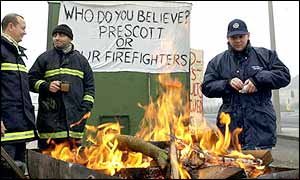 Unions and employers are likely to meet for talks Firefighters have called off the eight-day strike due to begin on Wednesday following an afternoon of talks at Fire Brigades Union headquarters. The FBU and employers are expected to return to the negotiating table, although there is still a wide gulf between them.
Downing Street welcomed the decision to call off the strike, saying it was "good news" if it indicated firefighters were prepared to discuss modernisation. The FBU national executive council met for more than four hours on Monday before announcing the strike suspension. Mr Gilchrist said: "We want to negotiate and discuss a resolution to the pay dispute in the fire service. "This just gives us the glimmer of a hope of doing that. Bain review Fire service minister Nick Raynsford welcomed the FBU's decision and any moves to resolve the dispute - provided they were within the parameters set out by Deputy Prime Minister John Prescott last week. He said: "The independent review in progress under the chairmanship of Sir George Bain remains key to resolving the dispute and will provide the basis for a future fire service."
It said there had been "little disruption" to UK life and no more fatalities than normal. The praise came on the back of statistical analysis published by the government's emergencies committee, Cobra, which said 19,000 troops had covered for the 55,000 or so striking firefighters "well". Mr Raynsford said this suggested that in particular two new methods of working, opposed by the FBU, could be successful. Joint control centres staffed by firefighters, ambulance and police staff had been "effective", he said. And he said emergency cover at night could be reduced, because most fires occurred in the early to mid evening. But the FBU said the government's proposals on modernisation were still "completely unacceptable". And BBC correspondent Kevin Bocquet said the Cobra report had been met with "some scepticism" in fire stations. One Liverpool firefighter, Station Officer Dave Perrin, said the claim that there could be less cover at night, for example, was misleading. "Most severe fires occur of a night-time... in the early hours usually, because there's nobody about, and they take longer to be detected." The national officer of the FBU, John McGhee, said the union was willing to talk to the local authority employers on any area of modernisation. But he said any plan to reduce night cover at fire stations would be "a ludicrous answer to public safety concerns". The next eight-day strike is now scheduled to begin on 16 December, but further walk-outs could be scheduled by the FBU. The government has said any more industrial action by the firefighters would be "foolish and foolhardy". | |
See also:  02 Dec 02 | Politics 02 Dec 02 | Business 02 Dec 02 | England 30 Nov 02 | UK Internet links: The BBC is not responsible for the content of external internet sites Top UK stories now: Links to more UK stories are at the foot of the page. | |||||||||||||||||||||||||||||||||||||||||||||||||||||||||||||||||||||||||||||||||||||||||||||||||||||||||||||||||||||||||||||||||||||||||||||||||||||||
| |
|  E-mail this story to a friend E-mail this story to a friend |
| |
| Links to more UK stories |
| | | ||
 | ||||
 | | Back to top
| ||
| ---------------------------------------------------------------------------------- To BBC Sport>> | To BBC Weather>> | To BBC World Service>> ---------------------------------------------------------------------------------- © MMIII | News Sources | Privacy |




 There are obviously hard choices and decisions before all the parties involved in this


