|
 |
 | | | | | | |||||||||||||||||||||||||||||||||||||||||||||||||||||||||||||||||||||||||||||||||||||||||||||||
| | | You are in: UK | |||||||||||||||||||||||||||||||||||||||||||||||||||||||||||||||||||||||||||||||||||||||||||||||||
|
| | Thursday, 14 November, 2002, 10:32 GMT Fighting flames in 1977 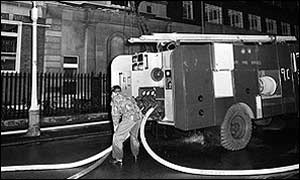 Roger Johnson manned the hoses in the 1977 strike For the first time in 25 years, troops in vintage fire engines are responding to 999 calls. Here Roger Johnson, an ex-soldier, recalls fighting fires in east London during the last firefighters' strike.
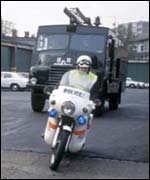
On average we got six call-outs a day. Each time a call came in, the police had to go and look first to make sure it wasn't a false alarm. If it was a fire, we had police outriders to escort us. This was partly to get through the traffic but mostly because of their local knowledge. The guys driving the Green Goddesses were from all over - Dover, Sunderland, Oxfordshire - so London was a different planet. Feel the fear Did it feel dangerous? Afterwards, perhaps. At the time there was a job to be done, looking after the guys I was with and the adrenaline rush. At a big warehouse fire, three of us were up on the roof fighting the flames and we didn't have a torch between us.
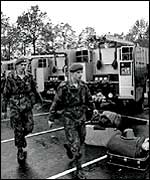
I was 22 at the time - even younger than the Green Goddesses we used to fight fires. It was like fielding in the slips because we had to hang around for ages in between bursts of activity. Also, because we were used to being in Northern Ireland, at each fire we found ourselves looking to see where the snipers were. We did 24 hours on, 24 hours off. We had to trek back to our barracks in Dover between shifts. We'd get home by mid-morning, and the next day we'd set off at six in the morning to get to Mile End for about eight o'clock. Men make up for machines It took about two trips to realise that I had to take my sleeping bag - it was that cold in the back of the lorry. We didn't get much training and what we did get was basic and on-the-job. The equipment was pretty primitive, but for what we had to do and for our skill level it was probably adequate. We were trained for what was on the Green Goddess and that held us back from going that little bit too far and endangering lives.
It's just a shame that it's fallen back on the squadies again. This time they've had more time to prepare, but the job has moved on since then. And once again, the squadies providing fire cover earn less than the striking firefighters. In 1977 I was married, I had a small baby, and my take-home pay was �130 a month - and that was as a lance corporal. But I'm proud that we did the job and that nobody died in the fires we fought. | |
See also:  13 Nov 02 | UK 03 Sep 02 | UK 22 Oct 02 | UK Internet links: The BBC is not responsible for the content of external internet sites Top UK stories now: Links to more UK stories are at the foot of the page. | |||||||||||||||||||||||||||||||||||||||||||||||||||||||||||||||||||||||||||||||||||||||||||||||
| |
|  E-mail this story to a friend E-mail this story to a friend |
| |
| Links to more UK stories |
| | | ||
 | ||||
 | | Back to top
| ||
| ---------------------------------------------------------------------------------- To BBC Sport>> | To BBC Weather>> | To BBC World Service>> ---------------------------------------------------------------------------------- © MMIII | News Sources | Privacy |




 My first blaze was a house fire where a paraffin stove had been knocked over. We got called to a paper mill, to empty warehouses, to a disused Chinese restaurant lined with polystyrene - I still remember the smoke from that one, it was absolutely pitch black.