|
 |
 | | | | | | |||||||||||||||||||||||||||||||||||||||||||||||||||||||||||||||||||||||||||||||||||||||||||||||||||||||||||||||||||||||
| | | You are in: UK | |||||||||||||||||||||||||||||||||||||||||||||||||||||||||||||||||||||||||||||||||||||||||||||||||||||||||||||||||||||||||
|
| | Monday, 28 October, 2002, 12:29 GMT Gypsy experiment faces eviction 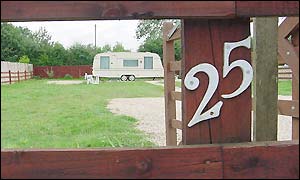 Individual plots: 28 families bought site
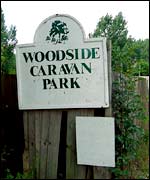
 As you drive into the Woodside caravan park near the hamlet of Hatch, children are playing in a paddock as horses graze. Mothers are hanging out clothes to dry and a few young men are repairing a van's engine.
To all intents and purposes, the five-year-old Woodside project is a self-enclosed community. It has roads, electricity, water and telephones. Family plots and caravans are neatly fenced off. There is a paddock for the horses and a peaceful copse at the back. Woodside began as an experiment in how British Gypsies live. But it may end this week in a bitter eviction battle as residents are removed from land they actually own.
In the past 20 years there has been a decline in the number of local authority sites available to travelling communities. In the early 1990s, Whitehall suggested Gypsies should buy sites they could manage themselves.
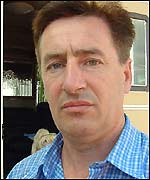
"We were roaming up and down," said Cliff. "But I was listening carefully to people like Tony Blair and what he was saying about how important his family was to him personally. "We thought we now had a chance to get somewhere." "We wanted to be seen to be doing the right thing. I didn't want my grandchildren growing up branded thieves and vagabonds."
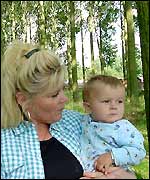
The plan was for a part travelling, part settled community, managed by those living there. It was, in their view, a halfway point between the cultural anchors of the Gypsy travelling traditions and the pressure from mainstream society to settle. Many of the parents saw Woodside as a way of getting their children into full-time education. There were plans for a community centre which, among other things, would improve access to health workers. For instance, at least a dozen children born at Woodside have been among the first in their families to get the key childhood vaccinations at the right times. There was only one problem: Woodside was not lawful. Legal battles Before it was sold to the Gypsies, Woodside had planning permission for a number of permanent buildings, such as a toilet block. Mid Bedfordshire district council says that Gypsies did not adequately seek or subsequently have approval for any work which would turn a former holiday park into a permanent settlement. In response, the Gypsies argued that a touring holiday park was effectively a permanent site with a higher density of residents than they themselves wanted. Earlier this year, the families lost this battle in the High Court and the council has set an eviction date of 4 November. The costs of the eviction could be as high as �180,000, though it is unclear if the council will seek to recover this from the Gypsies by seizing property. So even though the families own the land, they do not have the legal right to live on it. The gypsies say that they are victims of discrimination. A spokesman for the council said that it is simply enforcing planning laws applicable to all. It points out that government inspectors have dismissed almost a dozen appeals by the Gypsies. Time running out Since then, the mood at Woodside has been grim. Many of the families have already cut their losses and gone, even though Woodside is something of a cause celebre among travelling communities and their supporters.
A number of travelling families unconnected to the original project have arrived as word went around that there were plots available away from the roadside - precisely the kind of instability Woodside's founders say they set out to end. "We came to Woodside because we wanted freedom to be who we are but also respect from the rest of society," said Cliff Codona. "The rest of society doesn't want us to roam up and down, not least because that means we don't pay taxes. "So when we do try and settle, we come up against a horrific situation like this. I'd be the first to admit that we got some of this wrong, not least in our understanding of the law. "People have got to take time to get to know each other. There are a lot of people who don't understand us or our culture. "But evicting us will send us back in time, and we will resist it absolutely." If you would like to contact the reporter on the issues in this story then use the form below. You will be redirected to the UK page after using the form. | |   See also: 04 Sep 02 | Wales 28 Nov 01 | Scotland 27 Jun 01 | Scotland 14 Feb 02 | England Internet links: The BBC is not responsible for the content of external internet sites Top UK stories now: Links to more UK stories are at the foot of the page. | |||||||||||||||||||||||||||||||||||||||||||||||||||||||||||||||||||||||||||||||||||||||||||||||||||||||||||||||||||||||
| |
|  E-mail this story to a friend E-mail this story to a friend |
| |
| Links to more UK stories |
| | | ||
 | ||||
 | | Back to top
| ||
| ---------------------------------------------------------------------------------- To BBC Sport>> | To BBC Weather>> | To BBC World Service>> ---------------------------------------------------------------------------------- © MMIII | News Sources | Privacy |