
|
 |
 | | | | | | ||||||||||||||||||||||||||||||||||||||||||||||||||||||||||||||||||||||||||||||||||||||||||||||
| | | You are in: UK | ||||||||||||||||||||||||||||||||||||||||||||||||||||||||||||||||||||||||||||||||||||||||||||||||
|
| | Wednesday, 23 October, 2002, 14:11 GMT 15:11 UK Trying to stop future crime 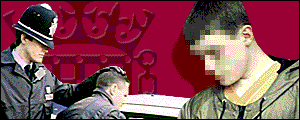
It sounds like something out of the Tom Cruise film Minority Report - where crime is prevented because it can be accurately predicted. But instead of "pre-cogs" - the creatures in the movie which can spot offences before they happen - the Youth Justice Board of England and Wales is setting up a series of special committees to do the job.
They will be referred to as "Pre-Crime at Risk" or "Youth Inclusion and Support" panels and will consist of specialists in education, social services and health, as well as police officers and youth workers. The experts will try to identify children between the ages of eight and 13 who are deemed to be most at risk of offending. They will look for kids who are displaying anti-social behaviour, have family problems or difficulties associated with drug misuse or mental health. The children - and their parents, brothers and sisters if necessary - will be referred to the panel. They will be offered help and support to steer them clear of a life of crime. Target areas The scheme will be piloted in the 10 police areas of England with the highest levels of street crime - Avon and Somerset, Greater Manchester, Lancashire, Merseyside, London, Nottinghamshire, West Midlands, Thames Valley, South Yorkshire and West Yorkshire. It is thought the panels will look at the cases of about 100 children every month. What makes this initiative unique is that it involves children under the age of 10, who are below the age of criminal responsibility. Under law therefore they are incapable of committing a crime. Stigma fears It is the first time a youth justice strategy has been directed at children so young. Critics say it is wrong to target children of this age, because they will be labelled as criminals and stigmatised. It is generally accepted that even the most experienced criminologist would be unable to forecast with certainty which children will end up offending and which ones will not. The danger, then, is that children will be damaged by early intervention. However, Lord Warner, chairman of the Youth Justice Board, believes the scheme will "de-label" the children. Voluntary He argues they have already been identified as potential offenders by local agencies: intervening at an early stage will give them a chance to lead a life away from crime. The key factor is that the programme is voluntary. Children will not be compelled to attend sessions. There will be no sanctions if they do not. Lord Warner says children and their families must show the willingness to accept help. But some experts believe the children who need most help are those who are least likely to turn up - which would defeat the object. As Tom Cruise found in Minority Report, preventing the crimes of the future is not so simple. | | See also:  23 Oct 02 | UK 18 Oct 02 | Scotland 09 Oct 02 | UK 09 Oct 02 | Politics 04 Oct 02 | England 17 Apr 02 | UK 23 Aug 01 | UK Internet links: The BBC is not responsible for the content of external internet sites Top UK stories now: Links to more UK stories are at the foot of the page. | ||||||||||||||||||||||||||||||||||||||||||||||||||||||||||||||||||||||||||||||||||||||||||||||
| |
|  E-mail this story to a friend E-mail this story to a friend |
| |
| Links to more UK stories |
| | | ||
 | ||||
 | | Back to top
| ||
| ---------------------------------------------------------------------------------- To BBC Sport>> | To BBC Weather>> | To BBC World Service>> ---------------------------------------------------------------------------------- © MMIII | News Sources | Privacy |






