
|
 |
 | | | | | | |||||||||||||||||||||||||||||||||||||||||||||||||||||||||||||||||||||||||||||||||||||||||||||||||||||||||||||||||||||||||||||||||||||||||||||||||||||||||
| | | You are in: UK | |||||||||||||||||||||||||||||||||||||||||||||||||||||||||||||||||||||||||||||||||||||||||||||||||||||||||||||||||||||||||||||||||||||||||||||||||||||||||||
|
| | Monday, 21 October, 2002, 01:46 GMT 02:46 UK Cobra recalled to tackle fire strikes 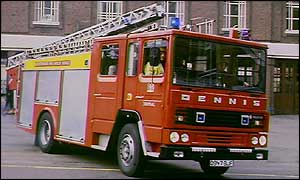 Retained firefighters think they can cover the strikes Prime Minister Tony Blair has ordered members of Downing Street's emergencies committee, Cobra, to reconvene in preparation for strikes by firefighters. Officials from the Ministry of Defence, Office of the Deputy Prime Minister and other key Whitehall departments are expected to meet on Monday for a "dummy run". But a Number 10 spokeswoman stressed that the prime minister still hoped the first fire service strike in 25 years could be averted. Full-time firefighters are planning the first of several walkouts on 29 October, in a pay dispute in which union members are seeking a 40% wage increase. 'Public blackmail' Cobra meets rarely - most recently after the 11 September attacks last year, though it also convened for the foot-and-mouth crisis and the fuel blockade. It will prepare action plans for handling emergencies during the strikes. Fire Brigades Union (FBU) leader Andy Gilchrist said his union was still prepared to talk to local authority employers or ministers ahead of the action. But he warned: "We are no longer to have our commitment to the safety of the public blackmail us into the issue of poor pay." Fire services minister Nick Raynsford told BBC Radio 4 the government would look "very seriously" at the outcome of an independent review into firefighters' pay. But he added: "I can't give a commitment in advance that we will implement whatever they say, because that would be signing a blank cheque and no government will do that." The FBU's rival, the Retained Firefighters' Union (RFU) - which represents some part-time staff - opposes action and believes its members can cover up to 90% of the country if strikes go ahead.
The RFU also wants better pay, but is seeking an alternative to strikes and favours co-operating with the inquiry. But the FBU believes it has waited too long for a response and Mr Gilchrist urged RFU members to join the strikes. Speaking on BBC Radio 4, he said: "The RFU represents a handful of firefighters scattered across the country. "I think they would be better to join our campaign and try and help us achieve a decent settlement on this issue of pay." 'Too little, too late' The 50,000 FBU members voted nine to one in favour of strike action. A 40% pay rise would see salaries for fully qualified staff rise to about �30,000. Local authority employers have rejected the demand and are offering a 4% increase as part of an interim deal. David Davis, shadow cabinet minister for the Office of the Deputy Prime Minister, called for a Commons statement on the crisis. He said: "This problem has been coming for some months now and the government has been one step behind at every stage and has so far done too little, too late." It was "appropriate" that emergency planning procedures should be introduced, he said. But it was vital the resources put in place by the government were "up to the job of protecting public safety".
The first walkout on 29 October will last for 48 hours. Others will stretch to as much as eight days, with one ending on Christmas Eve and another the day before Bonfire Night. The army - backed by Royal Navy and RAF personnel - is on standby to provide cover with 827 ageing 'Green Goddess' fire engines. The impact of strikes away from emergency incidents is expected to be minimal. Only London Underground is predicting significant disruption, and is closing 19 stations on strike days. This has prompted fears that inadequate cover could compromise tube train drivers' health and safety, which could lead to them taking industrial action. RMT union leader Bob Crow said his members supported the strike but had health and safety concerns. He told BBC News 24 that tube drivers would be balloted on possible action if forced to work "on unsafe terms". | |


See also: 21 Oct 02 | Politics 18 Oct 02 | UK 18 Oct 02 | Business 17 Oct 02 | Business 18 Oct 02 | Scotland 03 Sep 02 | UK 18 Oct 02 | UK Internet links: The BBC is not responsible for the content of external internet sites Top UK stories now: Links to more UK stories are at the foot of the page. | |||||||||||||||||||||||||||||||||||||||||||||||||||||||||||||||||||||||||||||||||||||||||||||||||||||||||||||||||||||||||||||||||||||||||||||||||||||||||
| |
|  E-mail this story to a friend E-mail this story to a friend |
| |
| Links to more UK stories |
| | | ||
 | ||||
 | | Back to top
| ||
| ---------------------------------------------------------------------------------- To BBC Sport>> | To BBC Weather>> | To BBC World Service>> ---------------------------------------------------------------------------------- © MMIII | News Sources | Privacy |






 4.07%
4.07%  95.93%


