|
 |
 | | | | | | ||||||||||||||||||||||||||||||||||||||||||||||||||||||||||||||||||||||||||||||||||||||||||||||||||||||||||||||||||||||||||||||||||||||||||||||||||||||||||||||||||||||||||
| | | You are in: UK | ||||||||||||||||||||||||||||||||||||||||||||||||||||||||||||||||||||||||||||||||||||||||||||||||||||||||||||||||||||||||||||||||||||||||||||||||||||||||||||||||||||||||||||
|
| | Wednesday, 9 October, 2002, 12:06 GMT 13:06 UK Mainline 'fiasco' rumbles on 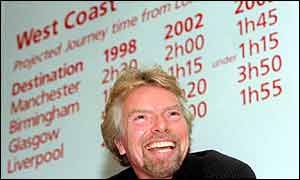 Virgin had high hopes for the West Coast Mainline
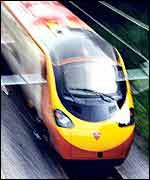
In 1996 Railtrack executives excitedly painted a picture of travel on Britain's railway artery of the future. High-speed airline-style trains would whisk passengers up and down the country at 140 miles an hour. Futuristic computerised signalling would constantly calculate how fast trains should travel, enabling slow commuter services to mix with expresses. Passengers would delight in a speedy and reliable service - at last. It has not happened. Railtrack is shortly to become an ex-rail company and the government is left sorting out the mess. The West Coast Mainline has become the biggest fiasco in the short history of rail privatisation. Withdrawn It has become quite normal for big engineering projects on the railways to fail to meet their own deadlines.
Some Pendolinos have been in operation this year, during the Manchester Commonwealth games. But most have been withdrawn while driver training is carried out. And they do not yet tilt, because the track still needs work. Bottlenecks Much of the �9.8bn is being spent on replacing worn out track - a legacy of years of underinvestment. The rest will go on redesigning the bottlenecks - straightening a bend here, adding a flyover there, to enable high-speed trains to shoot past without delays. The signalling will have to be improved as well. By 2005 the top speed should have been 140mph - cutting an hour off the journey time to Glasgow. The Strategic Rail Authority has now abandoned that goal because it believes the vast cost of improving the track to 140mph standards would not be value for money. It might happen one day, but no-one is holding their breath. Compensation Virgin is dismayed at the news. The company has spent �1.2bn on its new trains - which have impressed the few passengers who have travelled on them. Because they will not be able to reach their top speed, Virgin will need up to 10 extra trains, costing more than �200m, to maintain the frequency of the planned timetable. The company has already been paid �100m in compensation for the problems with the project, and is likely to want much more. Promise At least the muddle surrounding this project is now being resolved.
But is that a promise that can be kept? The 140mph service would have enabled the creation of 10 slots for trains to run on the line every hour. Dropping the speeds to 125 miles an hour will reduce the number of slots. But the SRA says once the upgrade is complete it will allow 12 trains an hour during peak periods, and as few as five when the line is less busy. In effect use of the track will be juggled to make up for the slower speeds. Improvement There will be more trains for those who want to travel at the most expensive times of the day, but not quite as many new services for leisure passengers. It will mean more careful management of the line is needed - in particular, making sure Virgin's expresses are not held up by slower stopping trains or long lumbering freight services. But the promised journey times are still an improvement over the current service. There will be two more trains to Birmingham every hour and a service to Manchester every 20 minutes from London. Journey times will be cut by half an hour to Manchester and Glasgow. Reliability The timetable for these improvements has of course slipped. Instead of 125mph running by 2002 it will now be 2004 for services to Manchester and 2006 to Glasgow. The entire project will be complete in 2008, an incredible 12 years after it was first launched. The SRA is hoping passengers will forget the slower speeds of their trains when they realise they are more likely to arrive on time. Passengers' representatives say the reliability of the service is more important than shaving off a few minutes from the journey. Rethinking As well as track improvements, achieving this will involve rethinking the way train services are managed. The SRA is considering whether it should merge Virgin Trains with some of the smaller commuter operators along the line. Whatever happens, the government's rail authority is taking a much bigger role in planning the future of the West Coast line. And that means if it all goes wrong, ministers will probably get the blame. | |
See also:  09 Oct 02 | UK 27 Aug 02 | UK 24 Jul 02 | UK 13 May 02 | UK 28 Apr 02 | UK Internet links: The BBC is not responsible for the content of external internet sites Top UK stories now: Links to more UK stories are at the foot of the page. | ||||||||||||||||||||||||||||||||||||||||||||||||||||||||||||||||||||||||||||||||||||||||||||||||||||||||||||||||||||||||||||||||||||||||||||||||||||||||||||||||||||||||||
| |
|  E-mail this story to a friend E-mail this story to a friend |
| |
| Links to more UK stories |
| | | ||
 | ||||
 | | Back to top
| ||
| ---------------------------------------------------------------------------------- To BBC Sport>> | To BBC Weather>> | To BBC World Service>> ---------------------------------------------------------------------------------- © MMIII | News Sources | Privacy |