|
 |
 | | | | | | |||||||||||||||||||||||||||||||||||||||||||||||||||||||||||||||||||||||||||||||||||||||||||||||
| | | You are in: UK | |||||||||||||||||||||||||||||||||||||||||||||||||||||||||||||||||||||||||||||||||||||||||||||||||
|
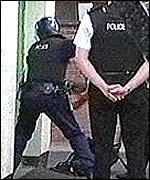
| | Wednesday, 14 August, 2002, 11:48 GMT 12:48 UK Getting tough on asylum  There were protests against the deportations
First, that by returning the Ahmadis to Germany, the government is adhering to accepted convention within the EU that an asylum seeker must claim asylum from the first safe place of entry.
And third, that despite the bullish pledges from ministers, the Home Office is still falling well short of the target set in April 2002 to remove 2,500 failed asylum seekers a month. All of this explains why asylum is such a potent political mix - and often, a human tragedy. Angry reaction In the case of the Ahmadis, there were clearly particular sensitivities. Removing the parents, Farid and Feriba, from a mosque was a high-risk strategy - though justified in law. Seizing the two children as they visited their parents at Harmondsworth detention centre was bound to provoke a furious reaction - but again ultimately endorsed by a High Court judge. And returning the family to a country where they claim to have suffered from racism and religious bigotry appears heartless.
The annual asylum figures, published by the Home Office at the start of this month, show that currently, the largest increase in applications is from Afghanistan - up from 5,555 to 9,000. And both Amnesty International and the UN High Commissioner for Refugees have criticised Britain for "rushing to return" refugees to Afghanistan when security remained volatile and the US-led coalition continued bombing. Tough strategy But if the Ahmadis can prove that under the 1951 UN Convention on the Status of Refugees that they have a justifiable fear of persecution - Farid is the son of an army brigadier who was prominent in the pre-Taliban regime - Germany would be obliged to let them remain. For Britain, though, the political and social consequences of a tough deportation strategy will continue to make waves. Last year, the Metropolitan Police warned the Home Secretary that the use of specially trained deportation squads could trigger disturbances in parts of London. That is almost certainly true of other parts of the country too. | | See also:  14 Aug 02 | England 14 Aug 02 | England 13 Aug 02 | England Internet links: The BBC is not responsible for the content of external internet sites Top UK stories now: Links to more UK stories are at the foot of the page. | |||||||||||||||||||||||||||||||||||||||||||||||||||||||||||||||||||||||||||||||||||||||||||||||
 | |
|  E-mail this story to a friend E-mail this story to a friend |
| |
| Links to more UK stories |
| | | ||
 | ||||
 | | Back to top
| ||
| ---------------------------------------------------------------------------------- To BBC Sport>> | To BBC Weather>> | To BBC World Service>> ---------------------------------------------------------------------------------- © MMIII | News Sources | Privacy |