|
 |
 | | | | | | ||||||||||||||||||||||||||||||||||||||||||||||||||||||||||||||||||||||||||||||||||||||||||||||||||
| | | You are in: UK | ||||||||||||||||||||||||||||||||||||||||||||||||||||||||||||||||||||||||||||||||||||||||||||||||||||
|
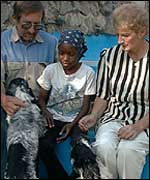
| | Thursday, 22 August, 2002, 13:55 GMT 14:55 UK 'The HIV orphan under our wing' 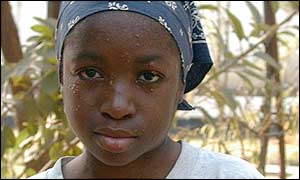 Suwilanji, like many in Africa, was born with the disease HIV/Aids is on the agenda at the world development summit not least because sustainable growth is not possible without healthy people. Here, an English couple in Zambia, Ian Godfrey and Julie Baldwin, tell of "thinking globally, acting locally" by helping an ailing orphan.
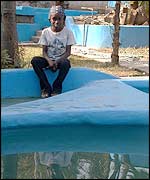
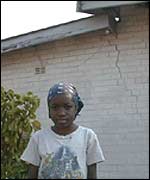
Her parents both died of HIV and Su was unfortunately born with the disease, passed on through her mother's pregnancy.
We try to help by feeding her good food and helping with medical care when we can. As much as we'd like to, we can't adopt her. Su lives with an aunt, who is a widow and can only earn enough to keep a roof over their heads and provide very basic meals. One meal a day is the norm for this family, rarely with meat or fish - it usually consists of mealie meal and vegetables, or a dish of beans. 'A lovely girl' We met our little Zambian friend through an Oxfam Conference on HIV which was held at our guesthouse last November.
Oxfam asked us to cook the meals and said they would deliver them.
When we met Su, we couldn't help but like her. We've become very attached to her and we've taught her to swim and play on the computer. She is a very intelligent girl and works hard at school. Desperate plight Su started to develop head sores around Christmas and nobody seemed interested in helping her.
So we took Su to our own doctor who agreed to give his consultations free of charge and bill us for the medication. The antibiotics worked for a few weeks, but then the sores returned. A couple of months ago, the doctor told us that she needs to go on to antiretroviral drugs, or ARVs. If she starts this treatment, she has to continue for the rest of her life, which the doctor says could be a long and happy one. But these life-giving drugs cost at least �80 a month. We are making every attempt possible out here to raise the funding for these drugs, but it's very difficult because this country is suffering from famine and recession. Hope for future Meanwhile her condition worsens by the day. She came down with malaria earlier this month. OK, we're all at risk of contracting malaria here, but Su's resistance is so low she picks up everything that's around.
Should she get a chance to mature, Su would make a good Aids councillor and so help others who, through no fault of their own, have been born with this disease. You can add your comments on this story by using the form below. Su's story is repeated all over sub-Saharan Africa. We have four HIV orphans living with us in Harare. We are feeding and clothing them and have enrolled them in a local school where we pay for their fees. We watched their mother and father both die of Aids. We kept collecting the mother from the roadside whenever she was discharged by the city hospital late at night, so as not to reflect badly on the hospital's Aids deaths statistics. In Zimbabwe, the extended family tradition of care can no longer cope, where runaway inflation, hunger and the wiping out of the productive generation reduces the family network to the very old and the very young. It's estimated 2,000 Aids-related deaths occur a week in Harare alone. New cemeteries are opened by road graders in virgin bush on the edges of the city. With all the money we, the US, are sending to serve the greed of capitalism, and to fight a faceless terror, we could serve the needs of many of these beautiful children. I am so happy to see people in Africa not afraid to touch, hug and love the next generation, suffering for the sins of the world. Try to imagine the situation if the entire population of the south-east of England was told it was terminally ill and had very few years remaining. Imagine the social and economic chaos. This is the situation in many African countries. It is individuals, working together and separately, who are the only support and succour most Aids orphans have. It's a beautiful thing you have done for this girl. It's good to know there are compassionate people willing to help others less fortunate than themselves in the heartless, money-hungry society we live in today. This is sad and tragic story reflecting the devastation across Southern Africa. I have seen friends and colleagues pass away from the plague, but what happens to their families is something statistics never show. Even African leaders such as Mr Mbeki refuse to recognise the plague whilst seeking a good economy; surely it means nil when there will be no one left to develop it. When we moan and groan about our lot in life we should remember young people like Su. We should also thank God for Ian and Julie, who put their money where their mouth is. We may not be in a position to change the world but we can change the area we live in by reaching out to those around us in small practical ways. Until rich Western governments begin to pressure the drug companies to improve access to treatment for HIV/Aids, Su's story will be repeated the world over. It really is time for action against this global epidemic which so far has affected 40 million people worldwide. | |
See also:  13 Aug 02 | Science/Nature 07 Jul 02 | Health 12 Aug 02 | Health 08 Jul 02 | Business 02 Jul 02 | Health 28 Nov 01 | Africa Internet links: The BBC is not responsible for the content of external internet sites Top UK stories now: Links to more UK stories are at the foot of the page. | ||||||||||||||||||||||||||||||||||||||||||||||||||||||||||||||||||||||||||||||||||||||||||||||||||
| |
|  E-mail this story to a friend E-mail this story to a friend |
| |
| Links to more UK stories |
| | | ||
 | ||||
 | | Back to top
| ||
| ---------------------------------------------------------------------------------- To BBC Sport>> | To BBC Weather>> | To BBC World Service>> ---------------------------------------------------------------------------------- © MMIII | News Sources | Privacy |




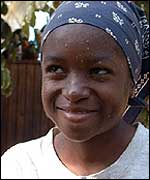
 Last year we met a 13-year-old girl named Suwilanji Nachiwezya. She is now like a daughter to us.