|
 |
 | | | | | | |||||||||||||||||||||||||||||||||||||||||||||||||||||||||||||||||||||||||||||||||||||||||||||||||
| | | You are in: UK | |||||||||||||||||||||||||||||||||||||||||||||||||||||||||||||||||||||||||||||||||||||||||||||||||||
|
| | Tuesday, 30 July, 2002, 16:43 GMT 17:43 UK Credit card deals made simple 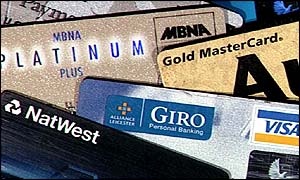 Pick a card, any card...
 The deals offered by the High Street banks are "complex", "uncompetitive" and take an "unreasonable amount of time" to figure out.
You're wondering where to start - you need a maths professor. No problem, borrow ours. Sebastian Van Strien is professor of mathematics at Warwick University, specialising in financial maths. He is going to show you how. "Basically it is quite easy to compare credit cards - you have the annual percentage rate (APR)," he says.
"And often there are opening offers, where you pay 0% on your balance, but for new purchases you must pay 20%. "The other thing you have is incentives. Some firms have perks such as air miles or cashback. "It's a kind of maze of different issues." So how do you compare? Get a pen and the scientific calculator you thought you'd never see again. The science part Right. Leave the APR. And the incentives. You need the flexibility of the monthly interest rate. Let's assume that you don't pay off the card balance but maintain a basic average debt over the year of �1,500 - and have the garden furniture to prove it. We'll say the monthly interest is 1%.
Now how does that compare with a new card that offers no interest for three months, then 2% per month thereafter? Sounds similar? Well, 1.02 to the power of 9 is... 1.1951. So that first year's interest would be 19.51% - a whopping �292.65 - and much more the second year. If you have two parts of your debt calculated at different rates as part of a new offer, you would need to calculate each part separately, using the same formula, and add them together.
Or perhaps by now you don't want a card at all anymore. Professor Van Strien warns: "If you use it just to make small purchases then the perks are more important. "But if you need to pay big amounts then the decision really becomes a big issue. It is maybe better and cheaper then to put it on your mortgage, or get a personal loan. "If you wanted to be really clever you could change every six months and take advantage of the deals. "But you really have to know you can pay it off before the rate goes up." | | See also:  30 Jul 02 | Business 20 Feb 02 | Business 01 Jul 02 | UK 20 Jun 02 | Working Lunch Internet links: The BBC is not responsible for the content of external internet sites Top UK stories now: Links to more UK stories are at the foot of the page. | |||||||||||||||||||||||||||||||||||||||||||||||||||||||||||||||||||||||||||||||||||||||||||||||||
| |
|  E-mail this story to a friend E-mail this story to a friend |
| |
| Links to more UK stories |
| | | ||
 | ||||
 | | Back to top
| ||
| ---------------------------------------------------------------------------------- To BBC Sport>> | To BBC Weather>> | To BBC World Service>> ---------------------------------------------------------------------------------- © MMIII | News Sources | Privacy |