|
 |
 | | | | | | ||||||||||||||||||||||||||||||||||||||||||||||||||||||||||||||||||||||||||||||||||||||||
| | | You are in: UK | ||||||||||||||||||||||||||||||||||||||||||||||||||||||||||||||||||||||||||||||||||||||||||
|
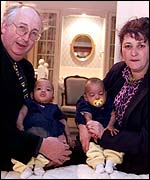
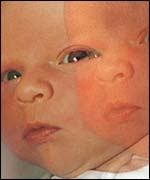
| | Wednesday, 10 July, 2002, 08:38 GMT 09:38 UK Life becomes a moral maze An embryo: But is it the right one? Who will decide who brings up the black twins born to white parents? It will probably be judges, who are nowadays faced with all sorts of horrendously complex situations to resolve. Solomon had it easy. In settling his dilemma between two women who both claimed a baby boy was theirs, the Old Testament king ordered the child to be cut in half so that both "mothers" could be satisfied. Rather than see her baby die, the real mother said the other woman could have the boy, to prevent him being hurt. Solomon identified this woman as the genuine mother, and thus cornered the market on wisdom. But an IVF mix-up is another matter altogether. The situation where two white parents have had black twins after a mistake at an NHS fertility clinic would give the wisest head an ache.
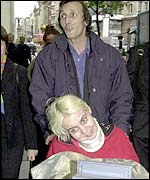
But what about the man who supplied the sperm? How much does it count that the white couple have been bringing up the children since their birth? Would it be right to separate the children from people they know as their parents to "correct" the original error? Judges will have to find the right decisions for all these problems, answers which not only satisfy all the traumatised people directly involved, but which also illustrate to an intrigued public that justice has been done. Perhaps to restrict the impact of public interest, the High Court has already put a blanket ban on identifying the parents or the twins. Tough questions for all But this case, like other high profile complex cases, will definitely be fought in the public eye. What about Miss B, the woman who was paralysed and who wanted to die, arguing before the court that she should be able to refuse further medical treatment? In the end, the court decided she was right, and she died a few weeks later.
In 2000, worldwide attention was put on to the Siamese twins Jodie and Mary, as surgeons tried to persuade their deeply religious parents that it was right to separate the girls even though it would mean certain death for Mary. The Court of Appeal judges who eventually decided that the operation should take place were open about how difficult they had found it grappling with the dilemma. Lord Justice Ward revealed some of the difficulty they had faced during his judgement, in which he said: "Each of us has truly agonised over this difficult case. The tragedy for this family has never been out of mind and I feel more sorrow for them today even than I did when first learning of their plight."
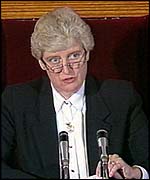
"Not only is it often a life or death decision to be made, the judge knows that the result will be scrutinised by both experts in the field and people with no legal training. They have to make sure that even the most difficult decision is written in an accessible way." Nevertheless, it is only right and proper that it is judges who make such decisions, Ms Lewis says. It is virtually impossible to legislate for every eventuality, so ruling on such cases should be up to those well-versed in analysing the law. Without explicit statutes in these areas, judges have to interpret what they understand to be the effect of previous acts. Open to democracy "It would be too much to put this burden onto others, such as doctors, parents or even politicians," says Ms Lewis, adding that the UK could follow the US's lead and set up a bioethics committee to review such individualised cases.
Concerned that the 1990 Human Fertilisation and Embryology Act might need to go further to control cloning, the Health Secretary Alan Milburn rushed a bill through Parliament last December to block any potential loopholes. "And if we don't like what the law has to say on this and other such issues, there are democratic ways to change that by voting out your MP." So it seems that it is up to us all to decide such fundamental questions. | | See also:  08 Jul 02 | Health 08 Jul 02 | Health 09 Jul 02 | Health Internet links: The BBC is not responsible for the content of external internet sites Top UK stories now: Links to more UK stories are at the foot of the page. | ||||||||||||||||||||||||||||||||||||||||||||||||||||||||||||||||||||||||||||||||||||||||
| |
|  E-mail this story to a friend E-mail this story to a friend |
| |
| Links to more UK stories |
| | | ||
 | ||||
 | | Back to top
| ||
| ---------------------------------------------------------------------------------- To BBC Sport>> | To BBC Weather>> | To BBC World Service>> ---------------------------------------------------------------------------------- © MMIII | News Sources | Privacy |